




In Its 10th Edition, With Over 1,300 Participants Worldwide: the Palestine Digital Activism Forum Highlights the Digital Battle Over the Palestinian Narrative Amid Escalating Wars and Disinformation
-

-

-

-

 !Copied
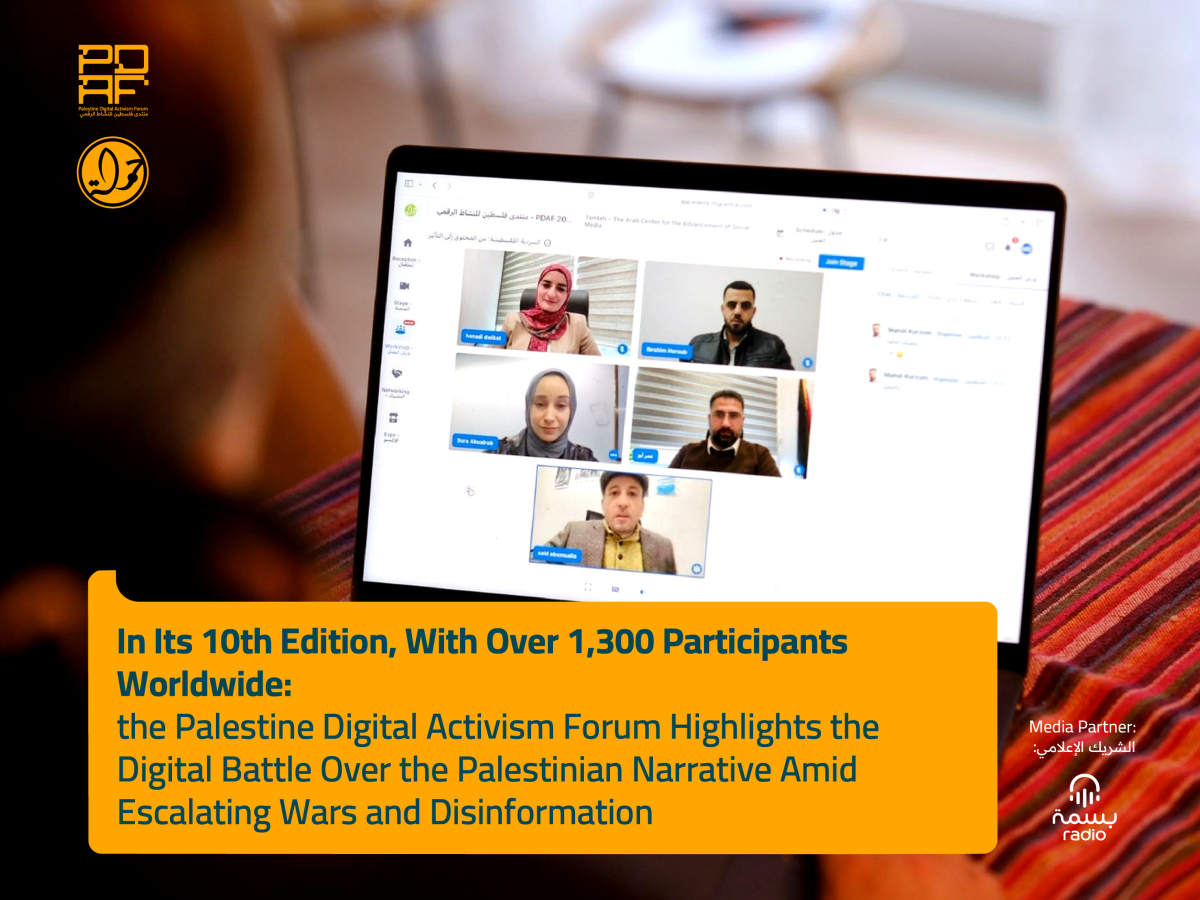
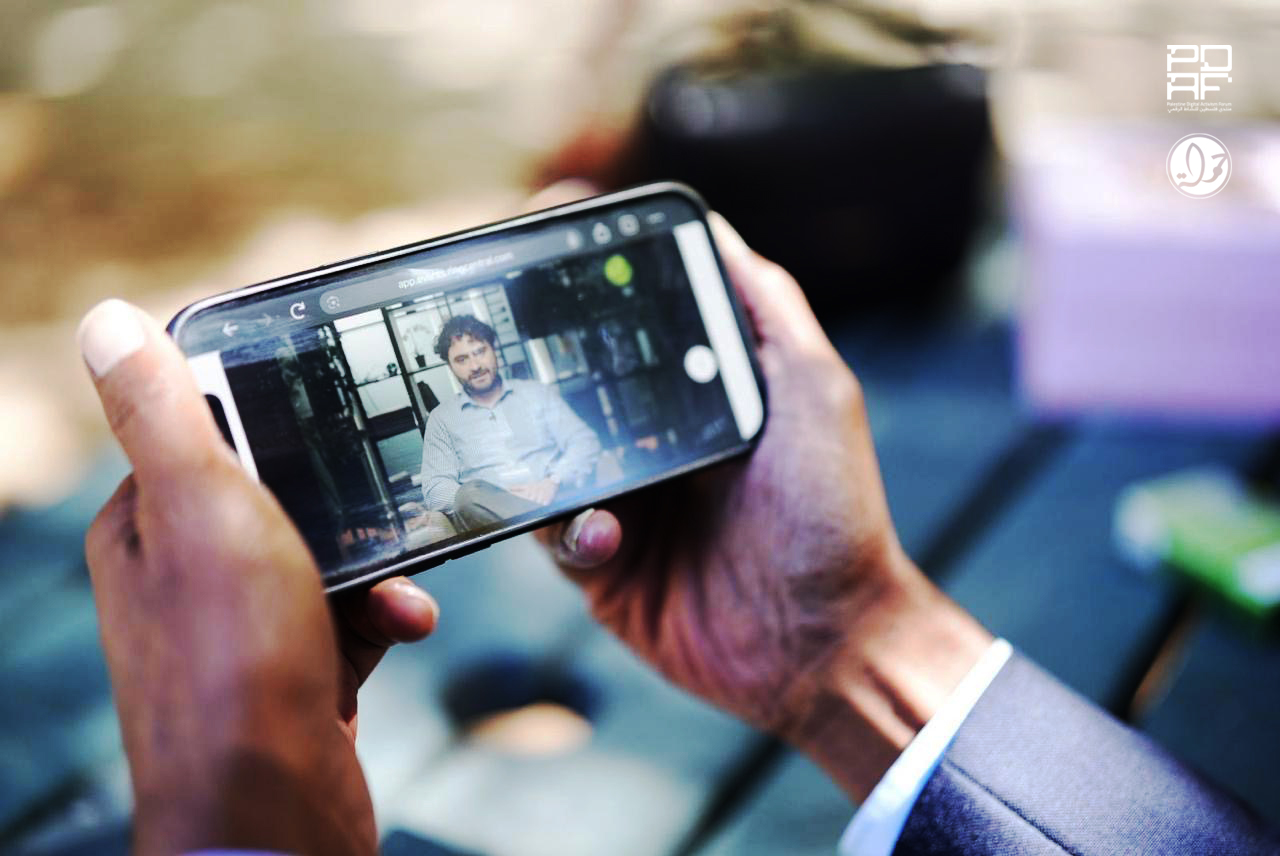
April 1, 2026, 7amleh - The Arab Center for the Advancement of Social Media concluded yesterday evening the activities of the 10th edition of the Palestine Digital Activism Forum (PDAF) 2026, held this year under the title “The Battle over the Palestinian Digital Narrative in the Information Age.” The forum took place fully online over two days, 30–31 March, with the participation of more than1,300 Palestinian and international participants.
This year’s edition came amid escalating wars and attacks across the region, accompanied by growing digital disinformation and intensified attempts to erase and distort the Palestinian narrative. In this context, critical questions have intensified around the role of digital platforms, artificial intelligence, and both traditional and digital media in shaping public awareness and influencing political discourse in Palestine and beyond. Over two days, the forum created a space for discussion, learning, and exchange of expertise on protecting the narrative, countering disinformation, and strengthening a Palestinian presence grounded in rights, dignity, and justice.
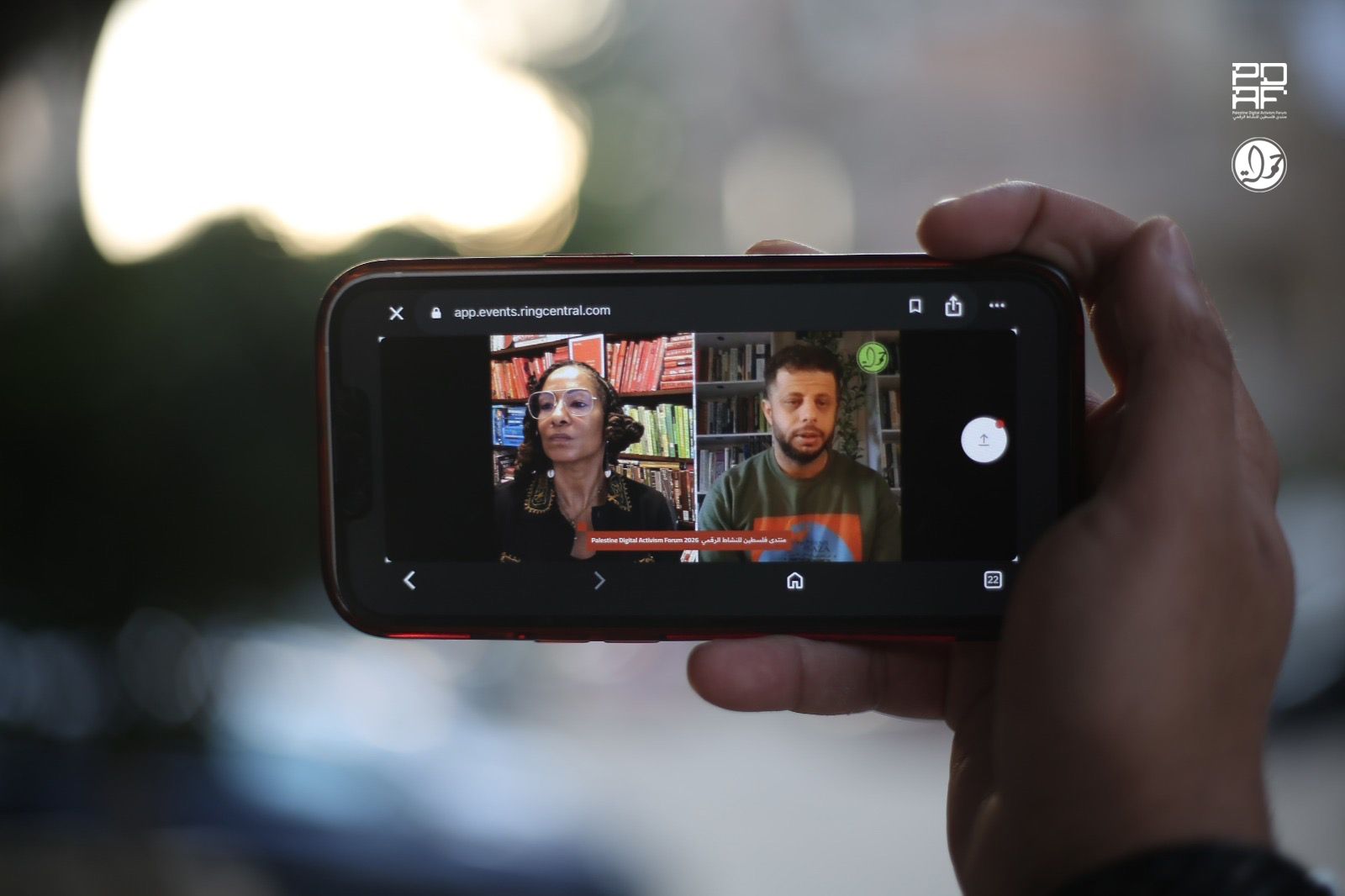
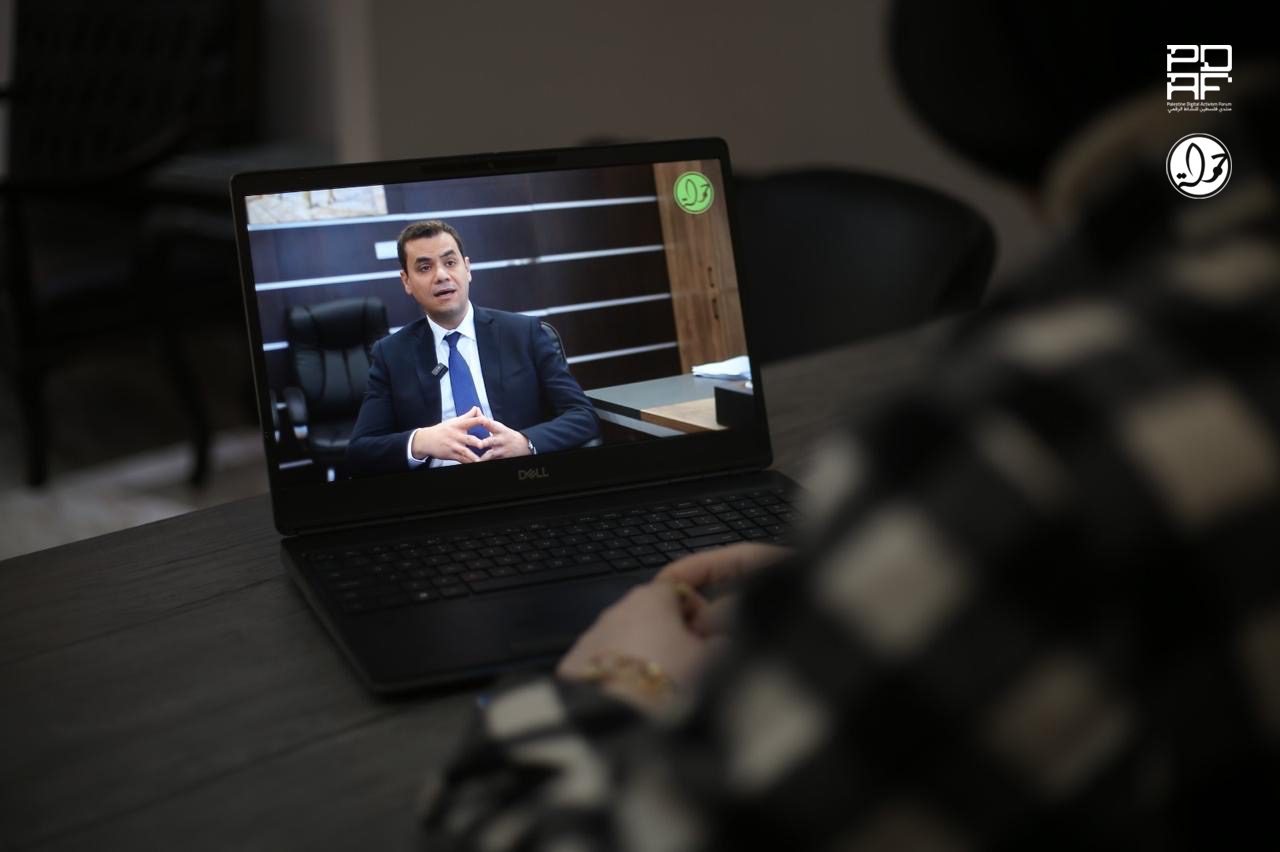
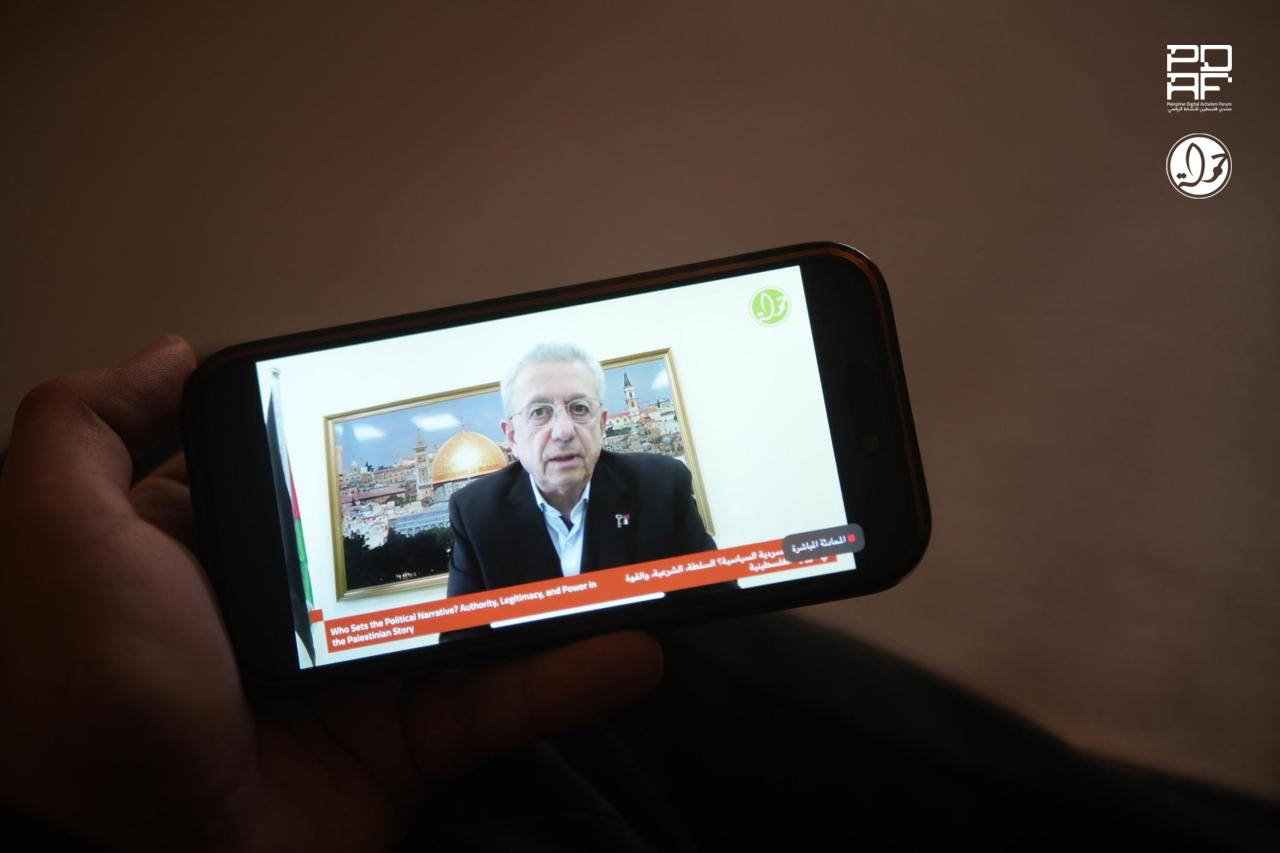
On its first day, the forum hosted a series of panel discussions and interventions that addressed the Palestinian narrative as an integral part of political and human rights struggle, rather than merely a communication tool. Speakers included Dr. Mustafa Barghouti, Secretary-General and co-founder of the Palestinian National Initiative; H.E. Dr. Abdelrazzak Natsheh, Minister of Telecommunications and Digital Economy; Dr. Ruha Benjamin, Professor of African American Studies; Member of the European Parliament Rima Hassan; Dr. Husam Zomlot, Ambassador of the State of Palestine to the United Kingdom; Member of the European Parliament Brando Benifei; and Palestinian actor, writer, and director Amer Hlehel.
Discussions emphasized that the struggle is no longer confined to the ground, but also unfolds across narrative, representation, memory, and knowledge production in the digital sphere. In this context, one intervention stressed that “the battle over the narrative is no less important than the battles on the ground,” while other sessions highlighted that “disinformation is no longer just a counter-narrative, but a tool of power,” and that “the goal of media work should be impact, not merely the transmission of information.”
The first day examined the role of traditional media, digital platforms, and artificial intelligence in reproducing political bias, silencing Palestinian voices, and widening the gap between lived realities on the ground and what reaches global audiences. Discussions further addressed political and legal discourse in Europe, the limits of “conditional freedom of expression” when it comes to Palestinians, and the urgent need to hold major technology companies accountable and dismantle digital systems that reproduce discrimination and reinforce dominant narratives. At the same time, speakers stressed the importance of shifting from reactive responses to building a proactive, interconnected Palestinian narrative capable of resilience and impact.
The forum also announced the PDAF 2026 Award, which was granted this year to The Palestine Institute for Public Diplomacy, in recognition of its systematic and professional efforts in defending the Palestinian narrative globally, particularly through initiatives promoting responsible digital communication and the development of practical tools that support rights-based Palestinian discourse in multiple languages. The award was presented by 7amleh’s Board Chair, Reem Amer.
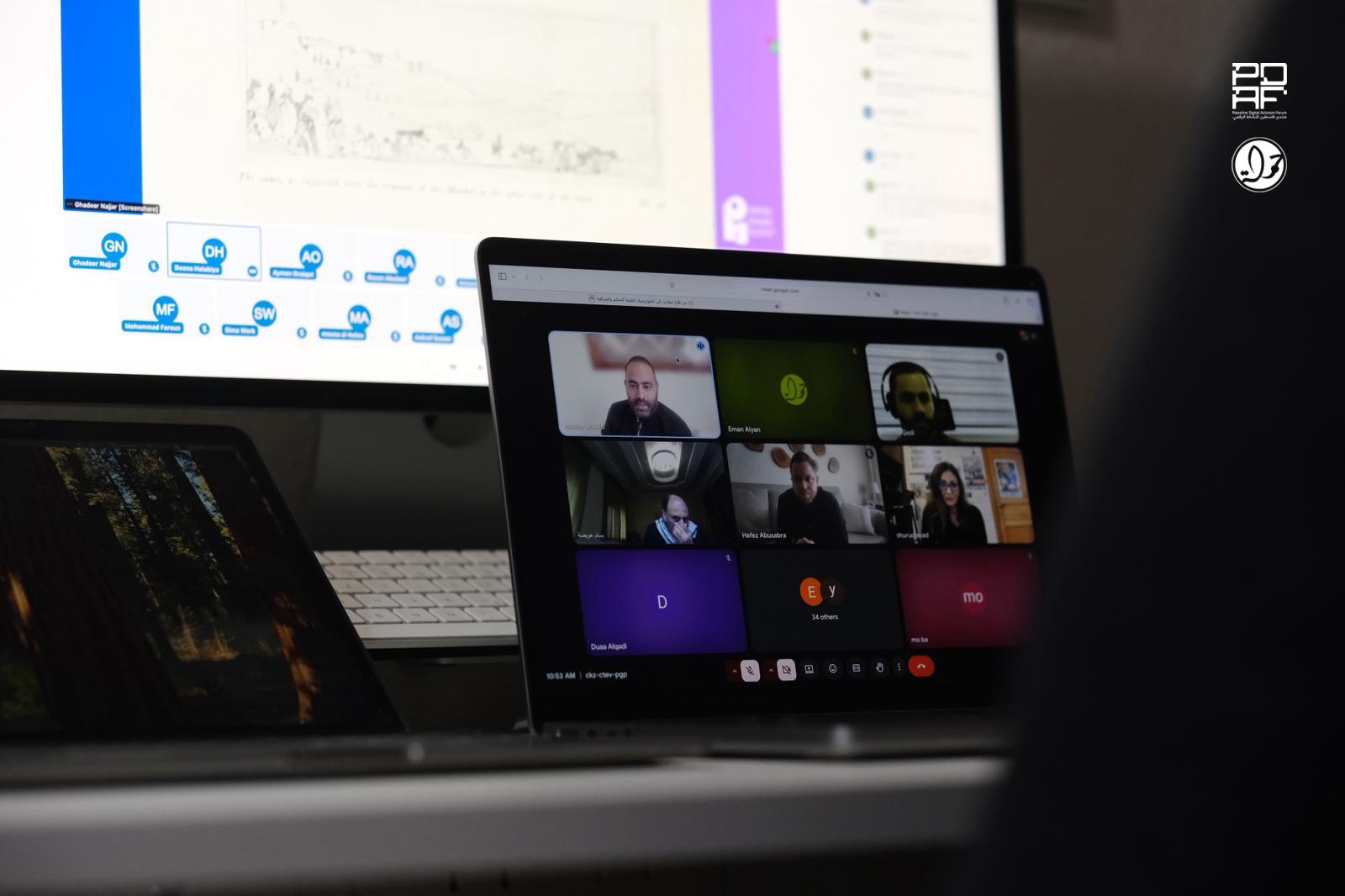
On the second day, the forum moved into its practical component through 18 specialized workshops, offering applied tools and knowledge in areas such as digital storytelling, verification and fact-checking, disinformation detection, visual and audio documentation, artificial intelligence applications, and community organizing. Workshops covered topics including transforming Palestinian narratives from content into impact, verification skills, detecting AI-generated content, responsible communication, neutrality and bias on Wikipedia, digital testimony documentation, war propaganda in the digital age, Israeli propaganda and AI during the war on Gaza, and pathways from narrative to collective action. Additional sessions explored memes, audio documentaries, data analysis tools for journalists and researchers, and emerging alternative platforms such as UpScrolled.
The workshops were organized in collaboration with a number of partner institutions, including the Arab American University, Palestine Ahliya University, Al-Quds University, Birzeit University, An-Najah National University, WITNESS, and RNW Media. These partnerships contributed to strengthening the forum’s practical and knowledge-based dimensions, linking theoretical discussions with specialized training tracks that respond to the growing need for professional and ethical tools in media, human rights, and digital work.
The 10th edition of the forum reaffirms that the Palestinian digital narrative is no longer marginal in public discourse, but has become a central arena in the struggle over truth, memory, and justice. Amid escalating digital repression and the targeting of Palestinian content through removal, disinformation, and distortion, the Palestine Digital Activism Forum continues to establish itself as a collective space bringing together journalists, researchers, activists, technologists, partner institutions, and engaged communities to develop stronger, collective tools to protect and advance the Palestinian narrative.
 Edition
Related Articles
Subscribe to Our Email Alerts
And stay updated with our latest activities, news, and publications!
