




Digital Security Conference in Bethlehem Discusses Protecting Palestinians Online Amid Escalating Violations
-

-

-

-

 !Copied
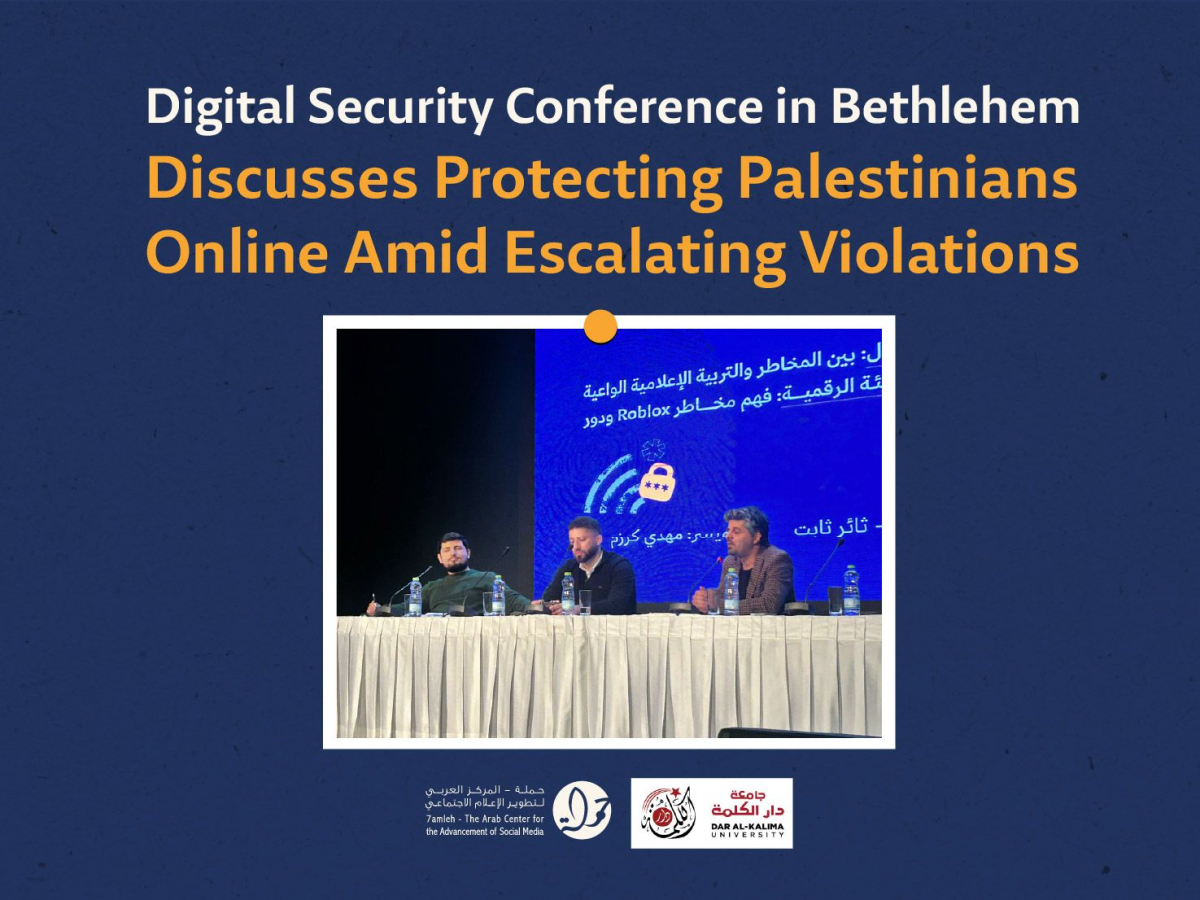
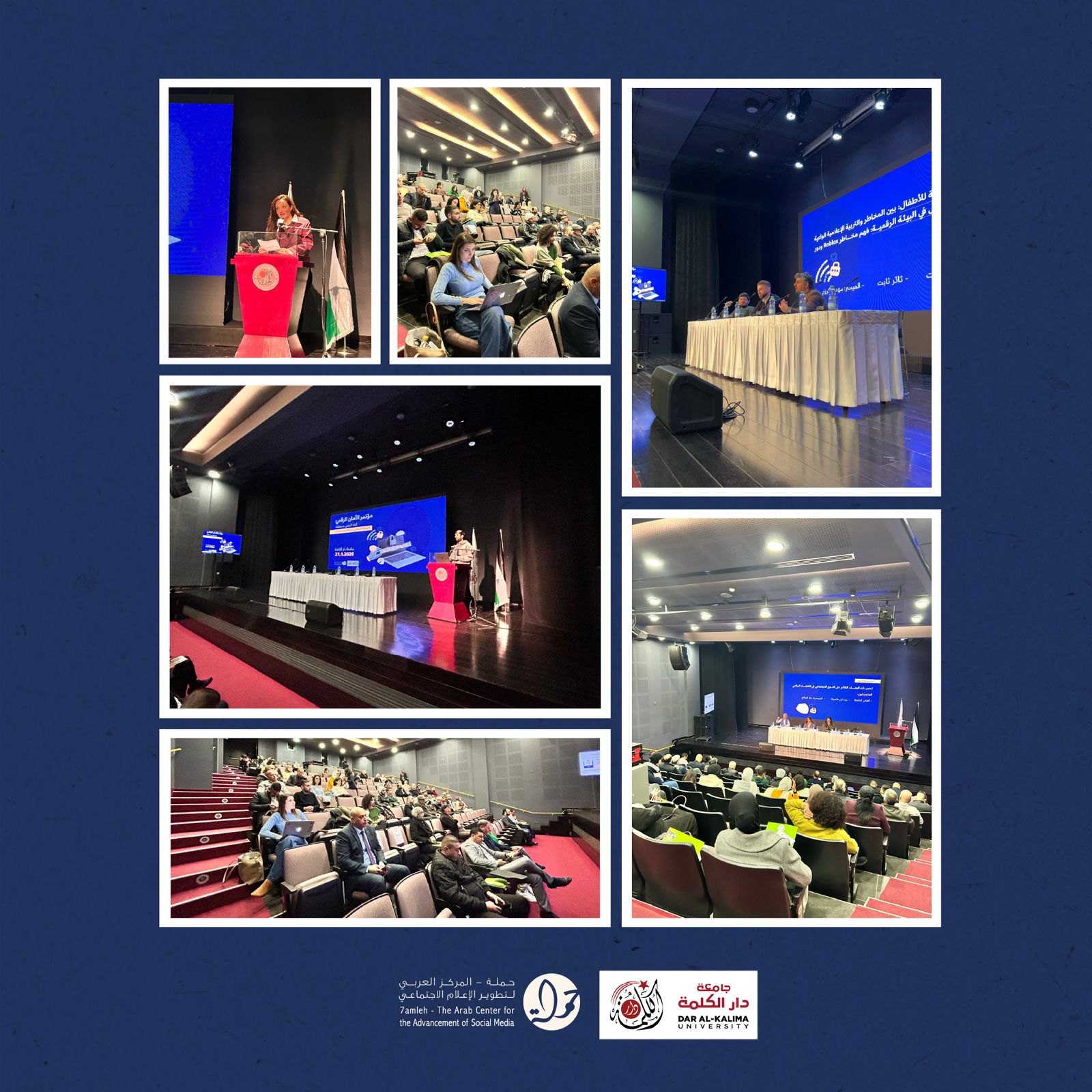
January 28 2026, 7amleh – The Arab Center for the Advancement of Social Media, in partnership with Dar Al-Kalima University, concluded yesterday the Digital Security Conference held on the university campus in Bethlehem under the title “Our Digital Security, Our Future: The Digital Space Between Freedom and Security.” The conference brought together a distinguished group of experts, legal professionals, and researchers working on digital rights issues, and was attended by approximately 200 participants, including university students, activists, and individuals interested in digital rights. The conference was held amid escalating digital violations against Palestinians and growing risks threatening their security and rights online—particularly in relation to children’s security, gender-based digital violence, and the rights to privacy and freedom of expression—while also exploring protection strategies, advocacy pathways, and the development of fair and safe digital policies.
The President of Dar Al-Kalima University, Rev. Prof. Mitri Raheb, stressed that digital security has become an integral part of contemporary human rights, emphasising that the digital space is no longer merely technical, but a cultural, political, and rights-based arena that directly shapes public awareness and the future of coming generations. He noted that Palestinians face complex, intersecting challenges online, where freedom of expression, privacy, and the protection of children and women collide with policies of censorship and digital exclusion. He added that the university is committed to serving as a platform for dialogue and critical research, fostering responsible digital awareness, and strengthening partnerships with civil society organisations to develop fair digital policies that ensure safety without undermining freedom, and that protect human dignity in the digital sphere.
For her part, Maria Zahran, Program Manager at 7amleh, welcomed participants and reaffirmed the center’s commitment to working towards an internet that is safe, fair, and free for Palestinians, and to empowering youth through capacity building and training in digital security, advocacy, storytelling, media, and digital rights. She underscored that the importance of the conference is heightened by the absence of legislation that protects privacy and personal data, alongside the rise of surveillance and deterrence policies—stressing that digital rights are an essential extension of human rights.
The conference also featured an inspiring talk by George Khoury, Digital Security Specialist at 7amleh, on the impact of digital security on daily life, the growing risks facing individuals and communities, and how to confront them, while highlighting the need to develop a critical understanding of how to engage with artificial intelligence technologies in our societies. Sessions addressed children’s digital security in the context of rapid technological change: Thaer Thabet, Director of Educational Media at the Ministry of Education and Higher Education, reviewed key risks such as privacy violations, exposure to inappropriate content, bullying, and digital exploitation, emphasising the role of media literacy, families, and educational institutions in promoting safe digital practices. Ibrahim Salahat, Digital Security Officer at 7amleh, presented on children’s use of Roblox and related risks, including contact with strangers, cyberbullying, and in-game purchases, highlighting the concept of “digital parenting” and offering practical guidance for parents.
In the session on gender-based violence in the digital space, researcher Afnan Kana’aneh presented findings from 7amleh’s study “War and Digital Shadows: Palestinian Women Between Voice Confiscation and Body Exposure in Digital Space,” outlining forms of digital violence including online harassment, blackmail, defamation, and hate speech, as well as their psychological, social, and legal impacts on survivors. Bisan Tmeizi, Head of the Media Unit at the Women’s Center for Legal Aid and Counselling (TAM), offered a critical reading focused on the actors producing digital violence—including authorities, users, and local communities—while discussing algorithmic bias, response mechanisms, digital feminist empowerment, and the importance of building safe digital support networks.
Under the theme “Palestinians in the Digital Space: Between Legislation, Privacy, and Freedom of Expression,” Jalal Abukhater, Policy Manager at 7amleh, addressed patterns of targeting the Palestinian narrative on social media platforms through censorship and content takedowns, privacy violations, and data collection, alongside ways to strengthen digital resilience and protect digital rights. Human rights lawyer Sawsan Zaher shed light on the legal frameworks governing the digital space and the reality of protecting freedom of expression and privacy for Palestinians, including how laws can be used to cover up violations, as well as avenues for legal advocacy. Munir Marjieh, Advocacy Unit Coordinator at the Community Action Center at Al-Quds University, focused on the specific digital reality in Jerusalem, the violations faced by Jerusalemites online, and restrictions on Jerusalem-related content, linking these to the broader political and humanitarian context.
The conference concluded with practical workshops in specialised tracks for parents’ digital security, activists’ digital security, and gender-informed digital security, strengthening practical knowledge and tools for protection and advocacy. The conference reaffirmed that protecting Palestinians’ digital space requires collective responsibility and cooperation between academic institutions, civil society, and decision-makers to develop fair policies that balance security and freedom, and safeguard the rights to privacy and freedom of expression.
 Digital
Related Articles
Subscribe to Our Email Alerts
And stay updated with our latest activities, news, and publications!
