

 !Copied
About this publication
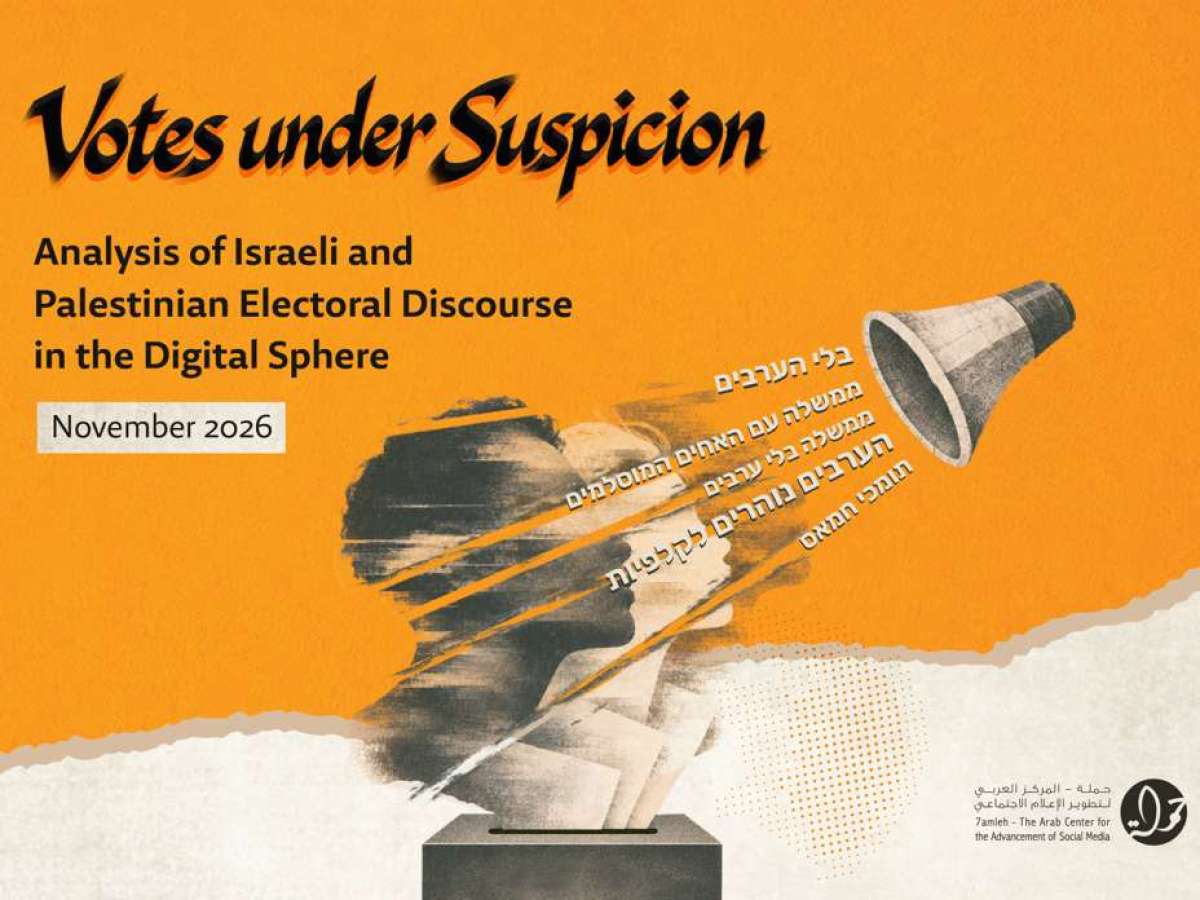
New 7amleh Publication Documents Digital Incitement and Disinformation Targeting Palestinian Political Participation in Israel During the Knesset Elections
25 November 2026, 7amleh - The Arab Center for the Advancement of Social Media has released a new research paper entitled “Voices Under Suspicion: An Analysis of Israeli and Palestinian Electoral Discourse in the Digital Space (2026)”. The paper examines incitement, disinformation and digital influence campaigns surrounding the elections for the 26th Knesset, and their implications for the legitimacy of Palestinian political participation.
The paper draws on a quantitative and qualitative analysis of Hebrew- and Arabic-language digital content on Facebook, X and TikTok between 1 August and 27 October 2026. Using an AI-powered language model, 7amleh collected 30,808 Hebrew-language posts and 12,037 Arabic-language posts, along with their comments, with a portion of the sample undergoing human review.
The paper found that 6.7% of all Hebrew-language content, including posts and comments, contained incitement or racism against Palestinian citizens of Israel. Prominent patterns included accusations of disloyalty or support for terrorism, racist stereotyping and derogatory language, and portrayals of Palestinians as a security threat or an “internal enemy”, alongside calls for restrictions on rights, expulsion and violence.
The analysis also revealed that 43% of Hebrew-language content discussing the inclusion of Arab parties in the governing coalition contained hostile discourse. This reflects the extension of hostility beyond security issues to debates about Palestinian representation in decision-making and political participation.
The paper also examines the use of organised influence networks, fake accounts and misleading AI-generated content to amplify political narratives, fabricate alliances and threats, discredit opponents, and cast doubt on the integrity of the electoral process and its results.
A comparison of the two discourses shows that Palestinian discourse focused largely on the value of parliamentary participation and the possibilities for political influence, while Israeli discourse centred on the struggle for power, the future of governance and the limits of political partnership with Palestinians. The paper also highlights a gap between Palestinian reliance on parliamentary representation and the limited opportunities for meaningful influence in a context of political exclusion.
The paper concludes that digital incitement and disinformation extend beyond electoral competition, contributing to the delegitimisation of Palestinian political participation, deepening exclusion and reproducing existing power relations in both digital and political spaces.
Executive Summary
The 26th Knesset elections were held against a backdrop of successive regional and domestic crises, sharp political and social polarization, and an escalation in suppression, violence, and incitement against Palestinians. This led many to consider it “pivotal” elections, the results of which transcend merely the forming of the next government, as it might determine the future of the Israeli governance and political system, the status of Palestinians within it, and the limits of their rights and political participation. The significance of these elections stems not only from its exceptional political context, but also from the central role technology and social media platforms played in shaping the electoral landscape. Those were not mere channels for disseminating electoral propaganda and circulating political positions but also became arenas for mobilization and competition over influencing public opinion, as well as shaping perceptions of political parties and candidates, Palestinians and their political participation,as well as the integrity of the electoral process and its outcomes.
Therefore, this paper aims to monitor and analyse Israeli and Palestinian electoral discourse on social media platforms, focusing on Palestinian-related issues; as well as to examine instances of incitement, disinformation, and digital influence campaigns that accompanied the elections. The paper adopted a combined research methodology of quantitative and qualitative analysis of digital content in both Hebrew and Arabic, using artificial intelligence tools, along with an analysis of relevant research reports and investigative reports.
A comparison of the two electoral discourses highlighted differences in the social media platforms used by each group, forms of expression, and the political figures and issues that captured public attention, underscoring the divergent priorities of Israeli and Palestinian societies. One of the most prominent findings of this paper is that the Israeli discourse focused on security issues, the struggle for political power, and the future of the political system; whereas Palestinian discourse focused on the effectiveness of parliamentary participation and the potential to exert political influence from within the Israeli parliament. The results also revealed a gap between Palestinians’ reliance on greater parliamentary representation and the limited opportunities for meaningful political influence due to political exclusion, aside from the absence of clear practical visions for achieving change beyond electoral participation. This was accompanied by the marginalization of national, civil, and economic issues in both the Palestinian and Israeli electoral discourses.
On the other hand, the paper found that security concerns, racism, and incitement have become central instruments of political mobilization in Israeli discourse. By depicting Palestinians as “enemies from within”, framing their political participation in security terms, and questioning the legitimacy of their participation and the integrity of their electoral gains, this discourse contributes to solidifying their marginalization, persecution, and the erosion of their political and human rights. The use of hostility toward Palestinians was not limited to mobilizing voters, but extended to the Israeli electoral discourse treating Palestinians as electoral ammunition used to discredit and delegitimize their political opponents by portraying any potential cooperation with them as a threat to the state's security and Jewish identity. Within this context, digital technologies, including coordinated influence networks, fake accounts, and AI-generated misleading content, have been employed to amplify political narratives, to devise false alliances and threats, and erode trust in the integrity of electoral process and its results. Thus, social media platforms have shifted from arenas for political expression and mobilization to spaces for struggle over the production of political truth and over determining who has the legitimate right to participate in influencing and shaping governance.
An analytical reading of Israeli and Palestinian electoral discourses reveals a structural disparity in the conditions of political agency. While Israeli discourse centres on the contest for political power, its exercise, and the shaping of its direction; Palestinian discourse reflects a deeper crisis concerning the legitimacy and effectiveness of parliamentary participation, as well as the absence of a unified political project capable of linking the instruments of “influence” and “change,” embodied in parliamentary participation, to clearly defined national and civic objectives. Thus, Palestinians are preoccupied with strengthening their presence within the political system, without possessing commensurate power to determine the rules of participation in that system, or the power to dictate their issues on the political agenda, or to overcome attempts to exclude them from the Israeli political landscape. This disparity extends into the digital sphere, where the capacity to express, publish, and mobilize does not automatically confer the digital power needed to steer public discourse or shape the political narratives that define perceptions of Palestinians, their political positions, status, and rights. The Palestinians themselves may even become the subject of political narratives crafted by others and used in their electoral disputes. Thus, digital technologies may contribute to reproducing existing power relations and prevailing stereotypes, and to drawing the boundaries of citizenship, belonging, rights, and the legitimacy of political participation.
Objectives of the Paper and Methodology
This paper aimed to monitor and analyse the Israeli and Palestinian electoral discourses on social media platforms, and to compare their priorities, orientations, and positions on political and civil rights of Palestinians. In other words, the paper did not address Israeli electoral discourse related to internal political conflicts in Israel in general; but rather limited itself to analysing the parts regarding the Palestinians and their status in the Israeli political landscape. The paper also sought to examine the manifestations of incitement, disinformation, and digital influence campaigns that accompanied the elections, and their potential impacts on shaping public opinion and perceptions about Palestinians.
To achieve this, 7amleh developed an AI-based language model which collects and analyses election-related content concerning Palestinians in both Hebrew and Arabic, including posts and comments, from August 1st to the end of Election Day, October 27th, 2026. The monitoring process involved random sampling of content from Facebook, X and TikTok platforms to minimize selection bias and capture a diverse range of electoral discourse patterns. Despite the large size and diversity of the sample, several factors may have influenced the final results, including differences between the three platforms in terms of their content-posting and engagement features, user demographics , as well as disparities in data accessibility for collection, particularly content posted through private accounts or closed groups. Furthermore, the classification of content as Israeli or Palestinian was based on the language used, namely Hebrew or Arabic, even if members of one group sometimes published in the language of the other group.
After collecting the materials, the language model categorized them according to a set of research themes that addressed the users’ attitudes toward electoral and political issues related to Palestinians, and then quantitatively analysed them. It is important to note that the quantitative results reported in this paper represent only a subset of the percentages and classifications generated by the model, given their sheer volume and the limited scope of the study. Therefore, in many cases, the presentation of results excluded percentages of posts that did not take a clear position on the issue at hand, those assigned to the “Other” category rather under the researcher predefined categories, and those with very low percentages.
Furthermore, part of the sample was manually reviewed, and a qualitative discourse analysis was conducted to interpret the significance of the patterns, themes, and political contexts that emerged in the results, allowing to move beyond quantitative indicators to gain a deeper understanding of political positions, orientations, and the ways in which they are expressed. The paper further relied on research reports and investigative journalism that documented coordinated influence campaigns, use of artificial intelligence technologies in electoral campaigns, and dissemination of disinformation and misinformation.
Theme 1: One Election, Different Digital Stakes
The 7amleh centre collected, using an AI-powered language model, the sum of 30,808 posts in Hebrew across Facebook, X, and TikTok platforms. Collectively, these posts garnered 126.5 million views and 7.7 million engagements (likes, shares, replies, and quote tweets), including 358,971 comments. The number of accounts that contributed to the dissemination of this content, whether through posts or comments, reached 150,822. Conversely, the tool collected 12,037 posts in Arabic throughout the same platforms, generating 36.5 million views and 2.3 million engagements, including 114,446 comments, with 46,078 accounts contributing to posting and commenting on the content.
The use of artificial intelligence to survey discussions across social media platforms made it possible to measure the prominence of specific issues and figures within Palestinian and Israeli electoral discourse, as well as to analyse the distribution of posts across platforms and content types. “X” platform took the top spot for Israeli discourse with 24,605 posts (79.9% of total posts), followed by Facebook with 5,194 posts (16.9%), and then TikTok with 1,009 posts (3.3%). On the other hand, Palestinian posts were overwhelmingly concentrated on Facebook, with 11,130 (92.5%), compared to 904 posts on TikTok (7.5%), while the tool detected only three tweets in Arabic on “X”.
This distribution reflects the importance of “X” social media platform in the study of Israeli political discourse, given the intense activity of Israeli political and media elites on it. This may also explain the scarcity of Arabic posts on the platform, as Palestinian activity is concentrated on Facebook, while Palestinians active on “X” may tend to address the Israeli audience in Hebrew. This may partly explain the appearance of comparatively more positive perceptions of Arab and Palestinian issues in certain findings of the Hebrew discourse analysis, although this phenomenon’s impact remains marginal due to the limited Palestinian presence on “X”, which is largely concentrated among politicians, analysts, journalists, and activists. Furthermore, data collection was limited to public content, excluding private content, which may affect the results, as users may tend to post or express more "moderate" opinions publicly, while expressing themselves more freely and without self-censorship in private accounts.
The sample revealed a tendency in Israeli electoral discourse toward text-based content, which accounted for 60.2% of all posts (excluding comments), followed by images (17.8%) and videos (13.1%). In contrast, videos dominated Arabic posts (41%), followed by images (28.8%), while text posts accounted for only 1.1%. This disparity may be linked to the nature of the platforms on which discourse is concentrated, but it may also reflect a difference in patterns of political expression; as the presence of text in Hebrew discourse suggests relying directly on political statements, positions, and commentary; whereas Arabic discourse on electoral issues relies more heavily on visual narratives and content.
Benjamin Netanyahu dominated the electoral discussions in both discourses, as he was the most frequently mentioned figure in Hebrew content (28.8%) and the second most frequently mentioned in Arabic content (18.3%), which demonstrates his continuous ability to impose his presence, steer political discussions, and even seize opportunities to propel himself to the forefront of public opinion. His prominence was further bolstered by his role as the focal point of election campaigns for the right-wing opposing him, left-wing, and Arab parties, all of which advocated for his ouster, thus, marking him as the central figure around whom Israeli political conflicts and alignments revolved. Gadi Eizenkot ranked second in Hebrew-language discourse (12.7%), as the leading candidate to replace Netanyahu, compared to eighth place in Palestinian-language discourse (4.2%), which focused more on other Israeli figures, most notably Itamar Ben-Gvir who came in third (11.1%) and Bezalel Smotrich who came in sixth (4.3%). This may be attributed to the association of Palestinian concerns with the policies and fascist practices of those two figures, to the extent that they have become a significant driver of political participation through voting. Indeed, Palestinian Parties’ election campaigns have focused on driving voting as imperative act in order to prevent them from joining the next governing coalition. Such discourse may contribute to reducing fascism and political threats to specific individuals, rather than demanding broader accountability from the power structures within the Israeli establishment itself. The most frequently mentioned figure in Palestinian discourse was Mansour Abbass (22% of the content), who ranked third in Israeli discourse (8.7%). He is one of the most controversial figures in Palestinian society due to his adoption of an Israelization and integration approach and his efforts to establish himself as a central player in Israeli politics.
Apart from Mansour Abbass, Palestinian politicians are almost absent from Israeli discourse, except for Ahmad Tibi, who came eighth (3.9% of posts), and Sami Abu Shehadeh, who came fourteenth (1.3%). The presence of the first can be attributed to his rhetorical eloquence and sharp statements that generate widespread media attention, while the visibility of the second is likely linked to the political persecution he faced, the Electoral Commission’s decision to disqualify his candidacy, the ensuing Supreme Court appeal, and his subsequent withdrawal of candidacy. This reflects the marginalization of Arab parties in Israeli discussions, as their leaders only receive media attention in controversial contexts, rather than being treated as legitimate political actors and partners in shaping and influencing the political landscape.
Despite the limited presence of Palestinian politicians as individuals in Israeli discourse, Arab parties have emerged as political blocs, led by the United Arab List “Ra’am” (11.3%, third place), followed by the Joint List (7.1%, sixth place), and then the National Democratic Assembly “Balad” (2.4%, twelfth place). The Likud party was the most frequently mentioned in Hebrew discourse (23.2%), followed by Hamas (11.4%). This may indicate that attitudes toward the latter play a key role in shaping Israelis' electoral expression patterns and voting behaviour, given that Hamas is portrayed as one of the most prominent “security threats” to Israel. In contrast, Palestinian discourse shows a central presence of Arab parties and a focus on domestic political issues rather than external threats. The United Arab List was leading the discourse with 30.7%, followed by the Joint List with 27.9%, and then the Democratic Front for Peace and Equality (Hadash) with 9.8%.
An emotional style of expression prevailed in both the Israeli (63.2%) and Palestinian (54.8%) electoral discourses. In Israeli discourse, this was followed by the analytical (9.8%) and informational (7.5%) styles, whereas in Palestinian discourse, informational content accounted for 12.9%, while only 5.7% was analytical. Analysis of the emotional content revealed that contempt and sarcasm dominated Israeli discourse (73.5%), followed by anger (44.2%), while hope was expressed in just 12.41% of the content. Feelings of contempt and sarcasm also dominated Palestinian discourse, albeit to a lesser extent (51.43%), followed by hope (32.5%) and solidarity (28.82%).
Dominance of the emotional style may reflect the severity of political and social polarization, the sensitivity of the issues at stake in light of the political and security conditions that have prevailed in the region for the past three years, and the aggravation of internal disputes. This might have pushed rational discussions to the sidelines in favour of emotional expression, and turned contempt and sarcasm into tools for criticism, protest, delegitimization, and mobilization in electoral discourse. The heightened sense of anger in Israeli discourse may indicate the entrenchment of resentment, bitterness, hostility, and patterns of violent expression in Israeli political culture. On the other hand, the prominence of hope and solidarity in Palestinian discourse may reflect an aspiration to encourage voting and bolster political representation as avenues for collective influence and change, following three years marked by the suppression of Palestinian rights, the crushing of political aspirations, and undermining of political activities.
Theme 2: Elections Between the Ambition for political influence and the Crisis of Governance
Among the 24 themes identified by the AI tool in Israeli and Palestinian discourses, those related to the election itself were the most widely discussed on social media; as the nature, objectives and forms of parliamentary work became issues in their own right, rather than focusing on political programs and agendas that voters could draw upon to inform their electoral choices. This pattern is particularly evident in Palestinian discourse, where the nine most frequently discussed themes, excluding incitement, were centred on electoral issues. These included attitudes toward Palestinian parties (19.5%), electoral participation versus boycott (14.8%), the Potential for Palestinians to Exert Political Influence Through Parliamentary Representation (5.9%), whether Palestinian parties would run on a unified electoral list or separate lists (5.7%), Palestinian Parties’ parliamentary performance (5.3%), whether to replace or retain the incumbent Israeli government (5.0%), whether Palestinian parties should join the governing coalition (2.6%), and the disqualification of Palestinian parties (1.5%). This focus on participation in the electoral process and parliament stems from the Palestinian disagreement over the boundaries of political participation, the risk of such participation becoming a form of normalization or a tool for whitewashing the occupation, and the extent of the legitimacy and effectiveness of elections as a means for securing Palestinian rights. This disagreement manifested both in the disparity among the parties preceding the formation of the Joint List and in the sustained debates, internal disputes, and reciprocal accusations among them throughout the election campaign, underscoring divisions concerning the desired Palestinian’ political project and approach (see the following two sections).
Similarly, political participation and representation dominated Israeli electoral discourse, accounting for six of the eight most discussed topics. The only exceptions were securityand national security, which ranked second, and racism and incitement, which ranked fourth (see the following section). The debate over whether to retain or replace the current government took centre stage (18.8%), followed by debates over whether Palestinian parties should be included in or excluded from the governing coalition (7.1%), the potential to exert political influence through voting and parliamentary representation (5%), Israeli Parties’ parliamentary performance (3.4%), and then the disqualification of Arab parties (2.4%). These findings reflect the governance crisis and the deep division regarding the current government, as well as the transformation of electoral discourse into a battleground not only for political power, but also over the future of Israel’s political system and its “democracy”, between a “religious Zionist” camp characterized by authoritarian inclinations and a “liberal Zionist” camp.
The results of the sample showed that 73.4% of Palestinian content that addressed voting or boycotting elections, supported voting, compared to 11.3% that supported boycotting, while the rest did not express a clear position or expressed hesitation. The primary motivations for voting were the desire to enhance political representation and influence (24.7% of pro-voting content), followed by ideological alignment and affiliation with Arab parties (18.3%), along, exercising of civil and political rights (16.4%). On the other hand, the motivations for the boycott were mainly a refusal to participate in the Knesset for ideological and nationalistic reasons (25.3% of the content supporting the boycott), the belief that participation would have limited influence(22.8%), and a lack of trust in Arab parties (19.8%).
Attitudes towards the Arab parties and their political and parliamentary performance remain at the heart of the motivations for voting and boycotting. While some Palestinians refuse to overlook their failures and lack of political effectiveness, others still see them as representing them and their political aspirations or hopes. The elections bring into focus the long-standing and deeply rooted tension embedded in the identity of Palestinians in Israel, between exercising Israeli citizenship and clinging to the Palestinian national identity, with Palestinian national belonging framed as incompatible with Israeli citizenship. However, the predominance of pro-voting content does not necessarily reflect the prevalence of this stance among Palestinians in general Some supporters of electoral boycott may be reluctant to express their views for fear of being accused of treason or collaboration with Israel, or confronted with claims that the votes withheld through boycotting the election “goes to Ben-Gvir”. Such claims form part of an exclusionary discourse in which certain groups have monopolized over the definition of patriotism. Conversely, this dominance may reflect a real shift in the attitudes of some boycotters, who chose to vote in the 2026 elections, where the voter turnout in the Arab society exceeded 77%, compared to 53.2% in 2022. This change can be explained in several ways: fear has become a driving force behind voting after three years of genocide, settlement expansion, escalating repression, and fascist tendencies. Alternative view is considering voting as an act of protest against the government’s policies and an attempt to avert "the worst", even if the alternative offers only "crumbs" without any expectation of a fundamental change in its policies. With the shrinking of spaces for freedom and political action and the absence of effective alternatives for confrontation, elections have become the “straw” to which Palestinians cling to survive and endure.
Among the Palestinian content that addressed the issue of political influence, 40.4% considered representation in the Knesset as having significant influence on advancing both civil and national rights, while 24.4% considered that it influences civil and economic rights only, with 13.9% considering its influence to be limited despite increased representation, and 9% who considered it to be minimal or non-existent, while 11.7% did not express a clear position. The most prominent forms of political influence within this content were increased bargaining and negotiating power (38.6%) and contributing to the replacement of the current right-wing government (16.6%). However, the use of parliamentary leverage as a bargaining tool depends on the willingness of Israeli parties to cooperate with Arab parties in exchange for their support in the formation of the upcoming government, an arrangement that, according to the findings, faces widespread opposition. In Israeli discourse, 33.8% of the content opposed any cooperation with Arab parties in forming a governing coalition, compared to 13.6% that supported their full participation in it, and 8.6% that supported their backing of the coalition from outside, while 36.8% did not express a clear stance. In contrast to the support expressed partially in Israeli discourse, for this cooperation, none of the parties in the Israeli “opposition” bloc has shown any willingness to collaborate with the Arab parties in forming a governing coalition. Therefore, Palestinian content, that considered influence from within the Knesset to be minimal or limited, attributed their position primarily to limited representation in the Knesset (41.1%), weak influence and parliamentary alliances (25.5%), and exclusion from positions of governance and decision-making (8.2%).
A similar pattern emerged in Palestinian content, where opposition to the participation of Arab parties in a governing coalition constituted the most common position (29.8%), compared to 26.3% who supported full participation, 10.2% who supported backing the coalition from outside without joining, and 9.7% who supported cooperation on specific issues, while 23.3% did not express a clear stance. These results may reflect the tension between national considerations and political pragmatism, which sees joining the coalition as an opportunity to influence government decisions and secure Palestinian rights, even at the cost of compromising on national values. Indeed, 40.1% of the content supporting joining the coalition justified their position by taking a pragmatic approach to achieving economic and civil gains, 32.2% by the right to political equality and representation, and 18.8% by preventing the formation of a more harmful government. In contrast, the opposing contents based their stance on concerns about legitimizing the Israeli government (34.9%), refusing to compromise on national principles (25.2%), and the belief that influence and gains are limited, even from within the coalition (21.7%). Accordingly, the debate among Palestinians is not so much about the importance of influencing Israeli policies as it is about the appropriate and legitimate means of achieving that influence. While some advocate an integration-oriented approach to expand their ability to create an impact, others favour maintaining a political independence-oriented approach that seeks to safeguard national identity and political principles.
The centrality of the influence issue in Palestinian electoral discourse, and the placing of major hopes in the ballot box as a tool for change, was reflected in the proposed solutions to confront Israeli policies. An increase in parliamentary representation was proposed as a means of challenging annexation in 6.7% of the content, fighting organized crime in 13.5%, and opposing Israeli policies in Gaza in 7.5% of the content. Notwithstanding the considerable reliance on parliamentary representation, 41.6% of posts addressing annexation proposed no concrete action to counter it, as did 20.1% of posts concerning organized crime and 48.2% of those addressing Gaza . In each of these three issues, this was the most prevalent position, followed by calls to strengthen parliamentary representation, as outlined above. These findings reveal a gap between the “ideology of influence” and the absence of concrete conceptions and practical measures for political action and grassroot mobilization. Parliamentary representation has thus become the primary political project for Palestinians in Israel, amid the decline of Palestinian political agency. This is reinforced by the fact that 45.7% of the content that called for an action of some sort, was to vote, and 15% of it was to support or join specific parties. The findings suggest that Palestinian discourse prioritized the promotion of electoral participation and parliamentary representation over the formulation of a coherent strategy for realizing the purported benefits of political “influence”. This may reflect the narrow conception of the forms political 'influence' can take, with its potential avenues largely confined to parliamentary participation.
While the Palestinian discourse focused on the viability, limits, and forms of political participation, the Israeli discourse was more centred on the power struggle; most of the content supporting the inclusion of Arab parties in the coalition (36.6%) endorsed this move with the aim of forming a majority and ousting the current government. Their stance is based more on pragmatic considerations than on a fundamental shift towards recognizing the Palestinians political agendas and embracing their demands. Nevertheless, the results reveal a strand of Israeli discourse that departs from these considerations and endorses the participation of Arab parties in governing coalition with the goal of advancing Arab-Jewish partnership (19.6% of the content) or stemming from normative support for Palestinians’ equal right to political participation and representation (18.4%).
Theme 3: Less national discourse, more security-oriented discourse
Despite the rise of the ‘influence’ discourse among Palestinians (see the previous section), the national and political issues where 'parliamentary power' is supposed to be utilised for influencing and addressing it, have remained relatively marginal in both Palestinian and Israeli electoral discourses, compared to issues of governance and authority (see the previous section). Among the 24 themes identified by the AI tool, the Naqab (Negev in Hebrew) issue ranked fifteenth in Palestinian discourse (0.5%), compared to twenty-fourth in Israeli discourse (0.1%). Gaza issue ranked sixteenth (0.4%) and twelfth (0.8%), respectively. The annexation of the West Bank ranked 21st (0.3%) and 9th (1.1%), while attacks on holy sites ranked 22nd (0.3%) and 21st (0.2%), respectively.
The reasons for the declining prominence of these issues in the electoral discourse of each group may vary. For the Palestinians, this may be attributed to a shift in focus towards daily concerns and economic and social survival (see the next section), or to fears of security-related persecution following three years of repressing Palestinian freedom of expression, as well as concerns that statements on security matters could be leveraged to rally Israeli public opinion against Palestinian political leadership. It may also be linked to a crisis of political leadership among Palestinians parties, reflecting in their inability to formulate a comprehensive national project, potentially contributing to electoral discourse retreating into partisan disagreements and debates over parliamentary representation. As for Israeli electoral discourse, this may be linked to the party’s broad consensus against the two-state solution, maintaining security control over the West Bank, and granting the Israeli army freedom to carry out military operations across various fronts. This may explain why the Israeli electoral contest focused on divisive issues, such as the failure on October 7th, the conscription of the Haredim (Ultra-Orthodox Jews), and the salvation of the Israeli political system and its institutions, issues that the present report did not address.
In this sense, national and political issues have become the backdrop to the electoral contest rather than an independent axis for debate, but they have also become tools for electoral mobilization, especially in Israeli discourse. The systematic utilisation of security and national security issues in election campaigns stands out here, as this theme ranked second in Israeli discourse (8.1%) in terms of the most frequently discussed topics. In a country whose political doctrine is based on the centrality of security, the exploitation of Israelis' concern that they are in constant existential danger has provided an opening for each party to present its agenda on the future security strategy. This divergence was apparent in the competing security narratives advanced during the campaign. Netanyahu published a national security document that enshrines the doctrines of pre-emptive warfare and territorial buffer zones, while his opponents emphasized his government's intelligence failures in the lead-up to October 7th and his failure to achieve the proclaimed objectives of the “war”, amid the persistence of multiple active fronts of confrontation. On the other hand, Ben Gvir and his “Otzma Yehudit” party exploited the demolitions and evictions in the Palestinian society in Israel for electoral propaganda purposes, by reopening cases that had not been pursued for over twenty years. Thus, Israeli electoral discourse perpetuates the treatment of Palestinians and Arabs in general according to a security-oriented logic, while anti-Palestinian sentiment becomes an electoral material and a subject of political contention.
This is evident from the reasons cited in Israeli discourse for rejecting the inclusion of Arab parties in the coalition. Specifically, 24.9% of the opposing content attributes this rejection to security or loyalty concerns, 23.5% to national or ideological incompatibility, and 15.3% denies Arabs of political legitimacy. Furthermore, 13.8% oppose the government's reliance on Arabs, and 10.6% express fear of Arabs wielding excessive influence. Thus, Israeli discourse challenges the legitimacy of Palestinian participation in decision-making positions by securitizing their political participation and conditioning cooperation with them on adherence to the Jewish national consensus. One of the comments detected by the AI tool was: "If the left comes to power with the support of the Arab parties, the Jews will have to go down to the shelters!! A terrorist state will be formed on the border of Netanya [...] Get ready and dig graves [...]". One of the most prominent manifestations of this logic is a tweet by Israeli journalist and writer Hanan Amiur on election day, which garnered over 900,000 views within six days. In it, he wrote: "The Arabs inflicted a political = October 7th on us", likening the high Arab voters’ turnout to the Hamas attack on October 7th, 2023. Yair Netanyahu wrote something similar on his "X" account: "The next October 7th will come from the Israeli Arabs". Such analogies illustrate a discursive framework that criminalizes Palestinian political participation by representing it as an attack on Israeli society and by equating the exercise of the “democratic” right to vote with an act of armed aggression.
This trend is further reinforced by the prevalence of hostile language in Israeli discourse surrounding security issues and Palestinian political participation. 48.9% of the content related to “security and national security” included hostile rhetoric, compared to 43% of the content that discussed the inclusion/exclusion of Arab parties in the governing coalition, and 42.3% of the content that addressed the disqualification of Arab parties. These findings indicate that hostility extends beyond countering security threats to encompass broader struggles over political power, influence, and representation, and even challenging the legitimacy of the Palestinians’ very presence within the Israeli political landscape.
It is worth noting that 6.7% of Hebrew content (posts and comments), i.e., 30,519 materials, contained incitement or racist remarks against Palestinian citizens of Israel. The most prominent patterns were distributed among accusations of disloyalty or support for terrorism (23.8%), racist stereotyping or derogatory language (20.8%), portraying Palestinians as a security threat or an enemy from within (20%), calls to restrict their civil and political rights (8.1%), demonization or dehumanization (7.8%), threats or calls to commit physical violence against them (6.7%), calls to withdraw citizenship from them or deporting them (5%), glorification or justification of violence (0.9%), and portraying them as inherently violent or uncivilized (0.9%). These patterns range from political and racial stigmatization to calls for exclusion and the denial of rights, and ultimately to threats of violence and incitement thereto. Thus, racism is utilised to define the boundaries of Palestinian political participation, de-legitimize Palestinian voters and parties, and mobilize support for Israeli parties by stoking voters’ fears of Palestinians . As one statement captured by the AI-powered monitoring tool warned, if the Arabs join the government coalition, "they will establish a Palestinian state here, that's clear!".
The widespread dissemination of inflammatory content across social media platforms, coupled with the amplification of fear-inducing and hostile narratives by recommendation and engagement algorithms, contributes to broadening exposure to such discourse, shaping perceptions of Palestinians, and progressively normalizing racist attitudes and violent practices against them. In this way, racism serves to create a climate in which discriminatory policies against Palestinians gain legitimacy and popular acceptance, transforming what were once considered extremist positions into seemingly justifiable political choices. This builds on the role played by social media platforms and the Israeli media over the past three years. By creating the perception that the state must be protected from the political influence of its Palestinian citizens, this discourse contributes to deepening polarization, reinforcing national and religious boundaries around political participation, legitimizing the exclusion of Palestinians, and further constraining their already limited rights.
The elections did not mark a turning point in the waves of racism and incitement. These were not fleeting phenomena limited to the Israeli elections; they did not begin with the election campaigns, and they will not end with their conclusion. Following the Israeli elections and the two Arab lists winning 19 seats in the Knesset, a report by “Fake Reporter” organization observed a 428% increase in the volume of anti-Palestinian discourse on social media platforms. This included conspiracy theories and collective accusations of supporting terrorism, linking them to Hamas, the Muslim Brotherhood, and the events of October 7th, and portraying them as “enemies from within”. The aim was to portray parliamentary and governmental cooperation between Arab and Israeli parties as a security threat in the first place, and a threat to the identity of the Jewish state secondly. Incitement was not limited to the securitization of political participation; it also manifested in the deployment of gendered and cultural stereotypes directed at Bedouin women who participated in voting. As the Israeli journalist Ayala Hasson stated following the announcement of the election results, saying that the "Change Camp" includes “Bedouin women from the Negev who wear the hijab, are often beaten, and whose husbands marry other women when they turn 26”. Her statement drew criticism from feminist activists and Bedouin women, who issued a statement criticizing the portrayal of Bedouin women solely as victims, disregarding “their independence and ability to have political say and positions, and making decisions on their own will”, as well as questioning the legitimacy of their electoral participation.
Theme 4: Civil Rights Between Marginalization and Politicization
Similar to the findings of the previous chapter, an analysis of the content gathered by the AI tool revealed that both Palestinian and Israeli electoral discourses marginalize civil and economic topics, as is the case with national and nationalist issues. Planning, housing, and demolition topics ranked tenth in Palestinian discourse (1.4%) and eighteenth in Israeli discourse (0.4%); Socio-economic conditions ranked eleventh (1%) and seventeenth (0.5%); Organized crime ranked thirteenth (0.7%) and nineteenth (0.3%); The representation and participation of Palestinian women ranked twentieth (0.3%) and twenty-first (0.2%), respectively. Thus, even at the civil and economic levels, the issues that political “influence” was expected to address remained largely absent from the discourse. This is particularly notable given that the campaign of the United Arab List, led by Mansour Abbass, was primarily premised on securing gains in these domains in exchange for concessions on the national level. Even among the content in support of voting, only 5.5% justified their support for voting by citing social and economic gains, while 23.8% of the content addressing the topic of "political influence" anticipated that such influence would translate into civic and economic gains.
Once again, the limited prominence of these topics in Palestinian discourse may be attributed to the dominance of debates over the viability of political participation and the prospects of achieving “influence”, often at the expense of substantive discussion of the issues that such influence is intended to tackle. It is possible that users considered achieving civil and economic gains to be part of the political “influence”, even if not explicitly mentioned. Although the suffering experienced by Palestinians in these domains is commonly explained as a consequence of discriminatory policies linked to their national affiliation, such issues are generally articulated within a civil rights framework. Consequently, they are not typically incorporated into a discourse of national and ethnic rights. Furthermore, the marginalization of civil topics in Israeli discourse, despite their centrality in the relationship between the state and the Palestinians, reflects the lack of engagement with Palestinians as an electorate or citizens with civil rights that need to be addressed.
Among the sectors considered to be of the highest priority for government funding in Palestinian content, social and economic development and civil services ranked first (23.8%); followed by infrastructure and public services (15.9%); planning, housing and urban expansion (12.5%); education and higher education (9.6%); employment and industrial development (9.4%); combating organized crime (7.8%); and health and social welfare (6.9%). Nevertheless, 61.1% of the analysed content maintained that government funding alone, despite its importance, is insufficient without the achievement of structural equality, while a further 9.2% argued that such measures would remain inadequate in the absence of guaranteed national and political rights.
While support for increasing government funding for Palestinian society (27.8%) exceeded support for reducing it (10.6%) in the analysed Israeli content, and 24.4% of the content remained neutral, the discourse advocating funding cuts was marked by exclusionary and discriminatory justifications. Among this content, 26.6% framed such funding as an unwarranted concession to Arab parties; 17.9% articulated hostile and discriminatory positions; and 4% prioritized security expenditure over investment in the civil development of Palestinians. This finding suggests that a pattern within a group of the Israeli society to politicize the civil and economic rights for Palestinians, framing it in terms of political concessions and bargaining rather than as fundamental civic entitlements grounded in the equitable distribution of public resources. This aligns with the fact that 25.5% of Palestinian content discussing funding identifies discriminatory policies and structural barriers as the most significant challenges to securing civil rights.
With respect to crime and violence, both Palestinian and Israeli discourses converge in attributing their prevalence primarily to inadequate law enforcement and insufficient deterrence. This explanation appeared in 16.5% of Palestinian content and in 26.1% of the Israeli content discussing the topic. However, they differ in their interpretation of the other causes. Palestinian content attributes the crime to negligence or deliberate complicity by the state (9%), and to social and economic inequality, and marginalization (4.9%); while Israeli content links it to the complicity of the Arab leadership and Arab society with crime (10.3%), the proliferation and smuggling of illegal weapons (7.3%), and social and cultural factors within Palestinian society (6.9%). This discrepancy highlights a fundamental difference in the attribution of responsibility for the persistence of crime. Palestinian discourse tends to emphasize the responsibility of state institutions, whereas Israeli discourse more often assigns responsibility to the affected community itself. In doing so, it reinforces racist stereotypes, shifts accountability away from state institutions, and obscures their obligation to combat crime and ensure the safety and security of all citizens.
Unlike the issues of funding, crime, and violence, where Israeli electoral discourse has demonstrated varying degrees of willingness to negotiate and adopt more flexible policy positions; the issues of planning, housing, and home demolitions have exhibited little comparable flexibility. 35.6% of Israeli content that discussed the issue framed house demolitions as necessary enforcement of planning and building laws, compared to 8.9% that considered it a policy aimed at displacing Palestinians, 7.3% as discriminatory enforcement against them, 4.8% as a means of controlling land and restricting their expansion, and 3.6% as a necessary measure to maintain governance and sovereignty. In contrast, Palestinian content framed demolitions as discriminatory enforcement (29.6%), a punitive deterrent policy (21.8%), a tool for displacement (15.3%), and a means of controlling land and restricting urban expansion (12%). The data highlights a profound divergence in the conceptualization of the relationship between state, citizenship, and the struggle over land. Whereas a prominent segment of Israeli discourse approaches house demolitions through the lenses of law enforcement, governance, sovereignty, and control; Palestinian discourse situates demolitions within a framework of discrimination, punitive practices, and uprooting, ultimately viewing them as measures that threaten Palestinian presence on the land aiming to uproot it from his lands.
23.9% of Israeli content believed that the best solution for dealing with unlicensed construction in the Arab society is to increase and expedite house demolitions, while 16.6% supported stricter law enforcement measures against unlicensed housing. In contrast, only 12.3% called for the expansion and acceleration of housing planning and development, and 7.3% for a reform of planning and building laws and their enforcement policies. This legal and administrative framework serves to legitimize demolitions without addressing the structural barriers that restrict access to building permits or render them unattainable for many Palestinians. Accordingly, it is unsurprising that 45.6% of the Palestinian content addressing the planning and housing crisis attributed it to discriminatory planning and land policies, while 11.3% linked it to inadequate housing and infrastructure development, and 8% associated it with land confiscation and the discriminatory allocation of “state lands”. These findings reveal a limited willingness in Israeli discourse to concede or compromise over land, which is considered a vital resource and a symbol of sovereignty, and an issue that requires a structural change in Israeli policies compared to issues of funding and crime.
Theme 5: Technology in the Service of Elections
As preparations for the latest electoral cycle commenced, the Israeli Electoral Commission announced an expansion of its cooperation with major Tech companies aimed at safeguarding the integrity of the electoral process and addressing the growing challenges posed by the digital environment. These measures include countering coordinated influence campaigns and identity impersonation, combating disinformation and misinformation, enhancing transparency in online political advertising, and establishing direct communication mechanisms with tech companies to address urgent cases, while avoiding undue interference in legitimate political debate. Google, Meta and TikTok have all announced the formation of specialized teams to monitor the Israeli elections, considering them a “top priority”. In contrast, companies such as OpenAI, Anthropic and X have not responded to Israeli requests for similar cooperation. Despite these advance preparations, election campaigns on social media platforms were not free from the aforementioned violations.
Initially, a report by the Israeli Institute for National Security Studies (INSS) and the organization "Fake Reporter" identified the activity of three foreign entities in Israeli discourse on social media platforms prior to the elections, namely: Iran through 150 accounts on the "X" platform, the "Isnad" network operating from Turkey through approximately 100 accounts, and the Russian influence campaign "Doppelganger" through dozens of publishing accounts and over a thousand accounts to amplify its content. The report indicates that the three campaigns engaged in the impersonation of Israeli identities and institutions. Despite the absence of coordination among them, they had a common objective: weakening public trust in state institutions and electoral processes and intensifying social and political divisions within Israeli society. This was achieved by embedding their narratives within ongoing domestic political debates, particularly those concerning regional conflicts, economic crisis, and encouraging emigration, rather than through direct attempts to influence voting patterns or election results. In other words, these campaigns sought to influence public sentiment by integrating into existing local discourse, which indicates the limited control over information and electoral discourse in the digital space due to its cross-border nature.
Otherwise, many entities in Israel, including candidates running for election, managed fake accounts to influence public opinion. ِAmong these was an influence network that included more than 300 fake accounts followed by more than 12,000 users, which was discovered and thwarted by TikTok in July. In addition, the company removed 1,431 fake accounts that impersonated elected officials or candidates for election. Moreover, an investigation by the Israeli organization “Fake Reporter” revealed a network of more than 100 fake accounts on social media platforms, impersonating Israelis with the aim of promoting National Security Minister Itamar Ben-Gvir and his party - “Otzma Yehudit”; which waged attacks on his political rivals, including Benjamin Netanyahu, Bezalel Smotrich, and Ofer Winter, as well as Israel's Channel 14. An analysis by “Expose” company revealed that a network of accounts previously linked to an influence campaign against Iran, that promoted Reza Pahlavi, began to promote Benjamin Netanyahu, engage with his accounts, repost his content, and attack his rivals, including Eisenkot, Lieberman, Golan, and Lapid before the elections. These accounts aim was to amplify the spread of his election campaign and demonstrate broad popular support for him on social media. These findings raise questions about the authenticity of public support and the unequal distribution of political power and electoral opportunities in the digital space, where technological and financial resources and tools are becoming a source of electoral influence, enabling certain candidates to operate organized influence networks while others lack the means to do so.
On the other hand, the election campaigns were marked by the widespread proliferation of disinformation and misinformation. As well as an increase in the use of artificial intelligence to the point that it became a political player in its own right, as parties relied on it to generate misleading scenarios throughout the election campaign. Palestinian citizens of Israel have been a key electoral material and resource, becoming a means of political rivalry, as Israeli Parties and candidates weaponized anti-Arab and racist attitudes to attack, discredit, and delegitimize their political opponents For example, on the day the Arab parties announced their intention to run in the upcoming 26th Knesset elections in January 2026, accompanied by a photo of parties’ leaders, the Likud party manipulated the photo to include both Bennett and Lapid, depicting them raising their intertwined hands with the Arab party leaders . The image aimed to mislead Israeli voters by suggesting a political partnership or coordination between Bennett, Lapid, and the Arab parties, particularly, since the image appeared authentic and did not contain any signs indicating that it had been altered. In another similar example, Bezalel Smotrich posted an AI-generated video on his Facebook page showing “Yashar!” party leader Gadi Eisenkot shaking hands with the Palestinian Authority president Mahmoud Abbass, and the Knesset member Mansour Abbass joining them. Regardless of the fact that this content was disinformation, it reveals that an alliance with Arab parties has become an accusation that Israeli candidates hurl at each other, and they, in turn, seek to deny it and 'exonerate' themselves from it. In a third video, Jewish candidates opposing Netanyahu are shown removing masks to reveal the faces of Arab candidates underneath; while another clip depicts Arabs on top of a building resembling the Israeli parliament as it collapses, reinforcing the fear that any alliance with Arabs in the upcoming coalition will pose a threat capable of annihilating the country's political system.
Thus, disinformation reinforces exclusionary perceptions that frame Palestinian political influence as a threat to the legitimacy of government and the electoral process. Such exclusion is grounded primarily in identity and national belonging rather than in specific political positions or ideological orientations. Moreover, using Palestinians as an electoral material dehumanizes them and strips them even of their status as citizens; reducing them to a mere tool serving the interests of Israeli parties, disregarding their agency and their independent political, cultural, and social standing. This is further illustrated in an AI-generated video, posted by Ben-Gvir, depicting Palestinians being transported to a place resembling a concentration camp. Ben-Gvir’s electoral campaign is largely centered on promises of further repression, persecution, and violence against Palestinians . In doing so, it reinforces the ideology of occupation and domination over Palestinians by presenting these practices as political achievements, sources of pride, and means of mobilizing and consolidating public support.
As for the extent of this phenomenon, TikTok announced that it had removed 45,311 AI-generated videos between June and September of 2023, which accounts for about 9% of the total content removed by the platform in Israel during the same period. According to the “Ze Be AI” (This is in AI) research project of the Open University in Israel, an analysis of more than 44,000 political posts on Facebook, Instagram, “X” and TikTok revealed that AI was used in more than 14% of them. The “Likud” party led in terms of the number of such posts, followed by “HaDemokratim” and “Yisrael Beiteinu”. By mid-October, the number of similar “Likud” posts had reached 1,800, representing about a quarter of the party’s content analysed by the project. Artificial intelligence has fundamentally altered the conditions of contemporary political game, enabling the rapid, low-cost, and highly persuasive dissemination of disinformation, as well as the amplification of perceived public consensus. In this context, AI has evolved from a mere instrument of content production into a powerful mechanism for shaping narratives, mobilizing political affect, and shaping truth .
As was the case with the inflammatory and racist rhetoric directed at Palestinians, which persisted beyond the conclusion of the elections, disinformation campaigns also continued after the electoral process had ended. Palestinians were accused of interfering with and obstructing the electoral process, while allegations of “stealing the elections” were circulated without supporting evidence. This campaign was led by the “Likud” party and members of Netanyahu’s coalition, as the “Likud” statement claimed that the elections “were stolen in the State of Israel by Arab parties that support terrorism and seek to eliminate the Jewish state, by committing serious criminal offences, including bribery, threats, violence, forgery, and the use of prohibited software to incentive voters to vote”. They also claimed that the parties received foreign funding, specifically from Qatar, with the aim of “imposing a foreign coup on the Knesset and the Islamization of Israel”. Bezalel Smotrich stated that Israel will not be “sold to radical Islam with terrorist money”. On Election Day, the anonymous Telegram channel "Uncensored Israel News”, which has 123,000 followers, posted an allegation that leaders of the United Arab List had transported a truck loaded with eight million shekels in cash, to be distributed to voters in envelopes. This disinformation campaign sought to turn “democratic” participation and high voter turnout in Arab society into a new accusation and security suspicion. The accusations of electoral fraud and foreign interference serve to undermine the legitimacy of Palestinian participation in determining the election outcomes, while also casting doubt on their political agency and independence. This also reflects Israeli parties' rejection of this minimal political agency exercised through voting, and portrayal of any Palestinian independence effort to confront Zionist fascism as an existential threat to the majority.
These accusations were accompanied by other attempts to de-legitimize the voting process. Netanyahu shared a report claiming that the ballots of right-wing parties had been destroyed, attaching a photo of a crumpled ballot. However, the Electoral Commission stated that its comprehensive examination did not reveal any evidence of systematic destruction of ballots. On the other hand, the "Melukadim News" account posted on X a news item claiming that the spiritual leader of the Druze community, Sheikh Muwaffaq Tarif, had instructed members of the community to vote for the “Likud” party, a claim that had already been debunked. Thus, despite its own involvement in disinformation campaigns and the spread of misleading content, the “Likud” did not face the same accusations it has levelled against Arab parties. This pattern points to a form of selective scepticism in which perceptions of electoral legitimacy are influenced by the identity of political actors and their supporters, while indicating that the “Likud” retains significant public credibility notwithstanding its record of manipulation and disinformation.
It should be noted that Netanyahu's coalition had paved the way through a long and systematic process of questioning the validity of the election outcomes and undermining public confidence in it, even before a date for dissolution of the Knesset was even announced. The "They're Stealing the Election from Us" campaign was launched months before voting even began, and adopted a pattern of frequent publication since April 2024, in which many influencers, news channels and biased opinion polls participated. Social media platforms have contributed to expanding the reach and visibility of these claims, allowing parties to build on them and continue to propagate them after the elections, thereby circumventing its outcomes.
Indeed, after the Arab parties won 19 seats in the Knesset, the “Likud” party demanded that the Israeli General Security Service (Shin Bet) intervene and investigate the allegations. Ben-Gvir called for the arrest of the leaders of the Arab parties who are “suspected of being involved with Qatari funds, and all other suspects in the case, including members of the Muslim Brotherhood and its affiliates, if there are legal grounds for their arrest”. Smotrich, the Chairman of the Central Elections Committee - Judge Noam Solberg, and the head of “Yashar!” Party - Gadi Eisenkot, and Israeli President Isaac Herzog supported an investigation of the suspicions. In contrast, the Israeli police maintained that no evidence or intelligence had been found to support the allegations advanced by the “Likud”. According to police sources, the claims amounted to “propaganda attempts and media manoeuvres” that lacked substantiation, an assessment echoed by the Acting Chairman of the Central Elections Committee, Dean Livne. In this context, the Shin Bet and the security services have become political tools in the hands of the ruling parties, that can be deployed in disinformation campaigns to confer an appearance of official legitimacy on unsubstantiated allegations. Even in the absence of evidence, the initiation or publicization of investigations can transform them into seemingly genuine suspicions, even if they do not actually lead to the substantiation of any charges. Consequently, the damage resulting from public knowledge of the investigation process would be sufficient for the disinformation to achieve its objectives.
It should be noted that the widespread use of technological tools in election campaigns, along with the accompanying deceptive practices and manipulation of public opinion, is largely linked to legislative and regulatory gaps in Israeli law. On the one hand, Israel’s Elections (Propaganda Methods) Law requires disclosure of the entity behind each electoral propaganda, and prohibits the dissemination of misleading information and impersonation of other parties. In July 2023, the Central Elections Committee issued rules requiring the labelling of electoral content generated or modified by artificial intelligence. On the other hand, a report by the Knesset Research and Information Centre pointed out that there is no comprehensive legal framework to regulate the use of artificial intelligence, deep fakes, bots and fake accounts in election campaigns, noting that Israeli authorities rely heavily on the policies of digital platforms alone. These challenges are further exacerbated by the limited ability of regulatory authorities to keep pace with the speed and scale at which misleading content spreads across digital platforms, especially when it is disseminated through unofficial networks or detached from its original context and recirculated in altered forms.
Conclusion
The findings of this paper reveal that the discourse in the 2026 Knesset elections was not limited to competition for parliamentary seats or party platforms and agendas, as Israeli and Palestinian societies entered the elections with different existential stakes. While the Israeli discourse focused on the conflict over the nature of the Israeli government and political system, the boundaries of political partnership, and the position of Palestinians within the Israeli political system; the Palestinian discourse was concerned with the viability of political participation, the possibilities for political influence and change, framing the elections as a struggle for Palestinian survival and existence.
In light of these pressing questions of sovereignty and survival, Palestinian national and civil concerns were largely relegated to the margins of electoral discourse, with limited effort devoted to developing clear strategic visions or actionable plans to address them. Instead, the discourse focused primarily on strengthening parliamentary representation and securing participation in the next governing coalition, despite the absence of any meaningful indication that Israeli parties were willing to cooperate with Arab parties up to and including Election Day. This revealed a gap between hopes for greater political “influence” and the limited tools available for achieving it; as well as the absence of a clear vision of what such influence should entail and what objectives it should seek to achieve. Furthermore, this is accompanied by the lack of concrete measures and plans to address the political and civil crises facing Palestinian society.
Furthermore, the paper reveals the prevalence of hostile language and the securitization of Israeli electoral discourse concerning Palestinians, starting with their portrayal as a security threat and "enemies from within," and culminating in treating their exercise of their democratic rights through voting as grounds for suspicion and skepticism regarding the integrity of the elections and the validity of their outcomes. Within this context, fear of Palestinians, incitement, and racist discourses have functioned as key mechanisms of electoral mobilization by Israeli parties. They have been used to consolidate electoral support, deepen partisan rivalries between Israeli parties, de-legitimize political opponents by accusing them of allying with Palestinians, and cultivate anxieties that any such alliance will lead to the collapse of Israel, its Islamization, or the establishment of a "terrorist" state on its borders.
Furthermore, the findings of the paper indicate that digital platforms are shifting from arenas for expression and electoral mobilization to spaces for contesting the production of political truth and democratic legitimacy itself. Disinformation campaigns, fake accounts and AI-generated content extended beyond efforts to influence voter positions. They have increasingly been used to fabricate facts and political alliances, manufacture perceptions of public support, undermine political opponents, and challenge the legitimacy of both elections and its results. Thus, attitudes toward parties and candidates are shaped less by their electoral agendas than by their ability to impose political narratives on the public sphere; and by the financial, technological, and organizational resources at their disposal. This is a contest in which Palestinian parties operate at a structural disadvantage, owing to the asymmetry of digital power that characterizes the relationship between the two sides. This gap, along with the expansion of coordinated influence networks, raises questions about the blurring of boundaries between legitimate electoral campaigning and organized manipulation of public opinion. The danger of this shift lies in the possibility that disinformation could become a routine feature of political competition rather than an exceptional practice, weakening the public's ability to distinguish reliable information from fabricated content, while also undermining trust in the media and political spheres in general. Conversely, the findings underscore the limitations of existing regulatory frameworks and accountability mechanisms in keeping pace with the rapid evolution of these technologies. As a result, the protection of electoral integrity remains dependent on fragmented responses from public authorities and tech companies, rather than on comprehensive, transparent, and enforceable safeguards.
These risks are exacerbated in a political context characterized by unequal power relations, racism, institutional discrimination, and structural violence rooted in an ethnocratic state. As a result, the consequences of digital disinformation and incitement against Palestinians reach far beyond electoral competition, reinforcing patterns of exclusion and erosion of their rights, security, and the legitimacy of their political participation. Thus, the disparity in authority and power outside the digital space may lead to disinformation and incitement within it, exacerbating the vulnerability of Palestinians, perpetuating control over them, and further restricting their rights.
Arabic Sources:
● Al Jazeera. (November 2026). The Israeli right escalates its campaign to smear Arabs following the conclusion of the elections. Al Jazeera.Net. Retrieved (05/11/2026), from: Click here.
● Al-Arab. (October 2026). Israel’s elections: Artificial intelligence fuels a smear campaign and exploits the wounds of war. Al-Arab. Retrieved (November 5, 2026), from: Click here.
● Al-Arab. (October 2026). Israel’s elections: Artificial intelligence fuels a smear campaign and exploits the wounds of war. Al-Arab. Retrieved (November 5, 2026), from: Click here.
● Al-Ittihad. (November 2026), Eisenkot attacks Netanyahu: Failed to reach war goals and the fronts are still open. Al-Ittihad. Retrieved on (05/11/2026), from: Click here.
● Arab 48. (November 2026). More than 1,700 people demand the condemnation of Ayala Hasson’s remarks and an apology to Bedouin women in the Negev. Arab 48. Retrieved (November 5, 2026), from: Click here.
● Arab 48. (November 2026). The Joint List files a petition to prevent Ben-Gvir from using the demolition of Arab homes in his election campaign. Arab 48. Retrieved on (05/11/2026), from: Click here.
● Axelrod, Gosh. (October 2026). Deepfakes: How does artificial intelligence affect Israel’s elections? Deutsche Welle (DW). Retrieved on (05/11/2026), from: Click here.
● Euronews (September 2026). More than 100 fake accounts. An investigation reveals the connections of an organized network promoting Ben Ghafir. Euronews. Retrieved on (11/05/2026), from: Click here.
● Majadla, Mahmoud. (October 2026). Accounts linked to a campaign against the Iranian regime promote Netanyahu. Arab 48. Retrieved on (05/11/2026), from: Click here.
● Mustafa, Muhannad. (September 2026). The 26th Knesset Elections (2026): What Is the Electoral competition Between Political Parties and Blocs About? Al Jazeera Centre for Studies. Retrieved (November 5th, 2026), from: Click here.
● Sadara Information and Consulting. (October 2026). "Netanyahu’s" National Security Document Enshrines the Doctrine of Preemptive War and Buffer Zones. Sadara Information and Consulting. Retrieved on (05/11/2026), from: Click here.
● Salahat, Rama, & Qadi, Ahmad. (March 2025). Racism and Incitement Index for 2024. 7amleh – The Arab Center for Social Media Advancement. Retrieved on (05/11/2026), from: Click here.
● Salahat, Rama. (February 2024). Racism and Incitement Index: 7amleh Center tracks 10 million instances of violent and hateful content in Arabic during 2023. 7amleh – The Arab Center for Social Media Advancement. Retrieved on (05/11/2026), from: Click here.
● The Knesset, report by the Knesset Research and Information Centre regarding the limits of AI tools usage in publications and elections advertisement campaigns: the lack of a comprehensive law for usage of AI tools in Election Campaigns. From: Click here.
● Zaidani, Nayef. (October 2026). Israeli incitement against Arab political lists, extending to demands for the arrest of their leaders. Al-Araby Al-Jadeed. Retrieved on (November 5, 2026), from: Click here.
Hebrew Sources:
● Amiur, Hanan (חנן עמיאור). X. Click here.
● Central Elections Committee for the Knesset (ועדת הבחירות המרכזית לכנסת). (July 2026). Decision of the Chairman of the Central Election Commission regarding petitions related to the use of artificial intelligence. From: Click here.
● INSS. (October 2026). Ahead of the 2026 Elections: A Report on Foreign Interference in Israeli Discourse on Social Media. Institute for National Security Studies (INSS). Retrieved on (11/05/2026), from: Click here.
● It's a small world (עולם קטן). (October 2026). They will not agree to a coalition with the Arabs – we have identified the weak links in the leftist camp. A small world (עולם קטן). Retrieved on (11/05/2026), from: Click here.
● Kahan, Rafael (רפאל קאהאן). (October 2026). Queues that never existed and ballots that weren’t destroyed: The lies that swept across social media on election day. Ynet. Retrieved (05/11/2026), from: Click here.
● Karni, Yuval (יובל קרני). (April 2026). Took my rights, faked my votes. YNET. Retrieved on (5/11/2026). From: Click here.
● Liel, Dafna (דפנה ליאל). (November 2026). Post-election: A sharp rise in hate speech against Arabs on social media. News N12. Retrieved on (11/05/2026), from: Click here.
● The Israeli Internet Association (איגוד האינטרנט הישראלי). (2026). Images modified using artificial intelligence on social media: The Election Commission's decision regarding the dissemination of misinformation and synthetic content. From: Click here.
● Trabelsi, Nevo (נבו טרבלסי). (October 2026). Removing accounts and dedicated teams: How are social media platforms preparing for the elections in Israel? Globes (גלובס). Retrieved on (11/05/2026), from: Click here.
This version is licensed under the following International License: Attribution-NonCommercial-ShareAlike 4.0 International
To view a copy of the license, please visit the following link:
https://creativecommons.org/licenses/by-nc-sa/4.0
 electoral discourse