

 !Copied
Policy Insight:
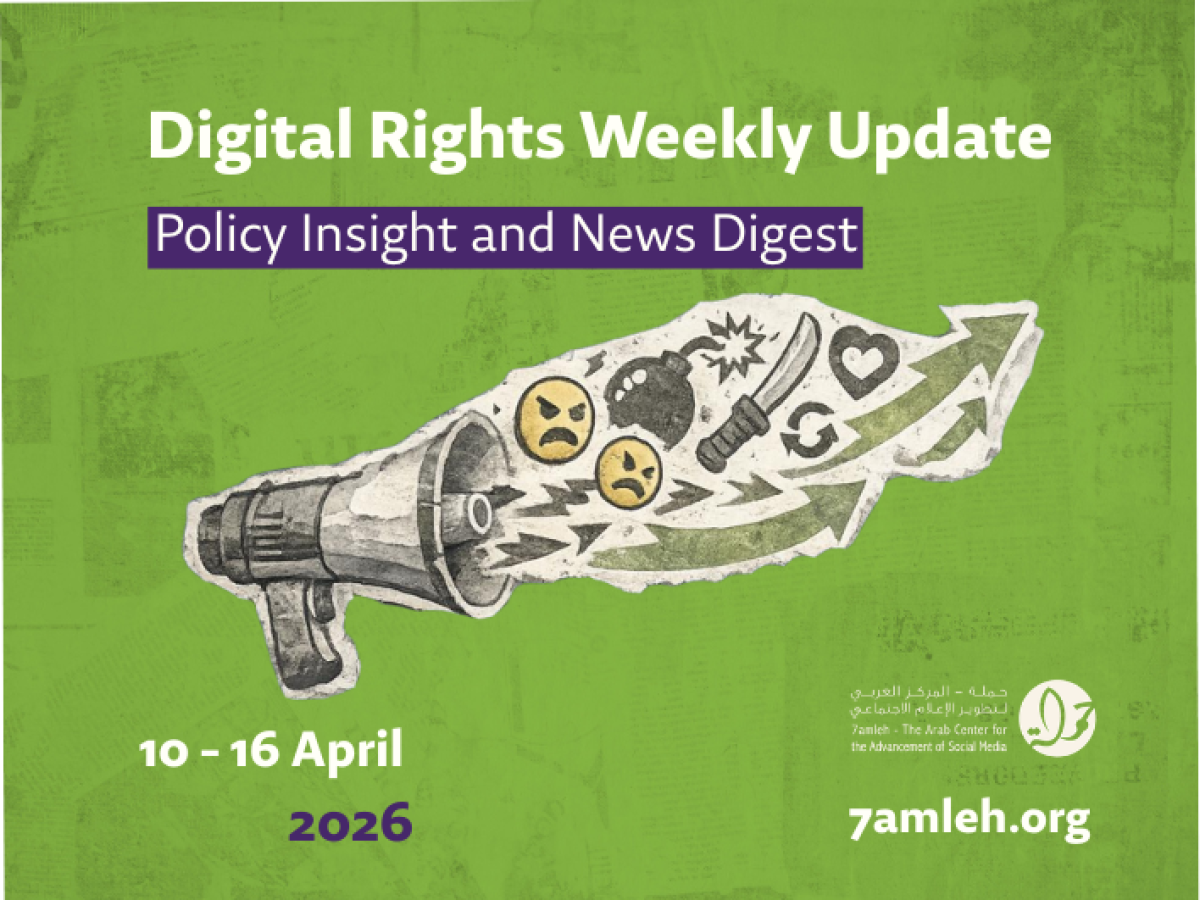
This week’s findings sharpen an urgent reality: platform harm is not only about what is removed, but what is actively incentivized. In its latest report, 7amleh exposes how Meta’s monetization systems are financially enabling settler-affiliated and extremist accounts that promote violence against Palestinians. This is not a moderation gap, but rather is a structural failure where harmful content is rewarded, amplified, and turned into profit despite clear violations of the company’s own policies and international human rights standards.
At the same time, broader reporting this week points to a deepening ecosystem of digital harm. From coordinated disinformation campaigns to invasive data practices on platforms like LinkedIn, and the collapse of Gaza’s already fragile digital infrastructure. Together, these trends show us yet again how this moment demands sustained pressure. Exposing these systems is only the first step, but challenging the business models that profit from repression, and pushing for enforceable standards that protect Palestinian rights is what must follow.
News Digest
New 7amleh Report: Meta Monetizes Settlements and Violence Against Palestinians
7amleh
April 13, 2026, 7amleh - The Arab Center for the Advancement of Social Media has released a new report titled “Monetizing Occupation: Meta’s Financial Enablement of Settlement Activity and Violent Rhetoric Against Palestinians.” The report reveals how Meta allows Israeli far-right pages, settler-affiliated accounts, and extremist media outlets to generate revenue through its platforms, despite publishing violent, racist, and inciting content against Palestinians, and despite many being directly linked to promoting illegal settlement expansion, as well as widespread violence and attacks against Palestinians in the West Bank. The report finds that the issue goes beyond Meta’s failure to remove or limit such content; it extends to financially enabling it through monetization programs. In doing so, the company not only tolerates violent and inciting speech but actively incentivizes its production and spread, violating its own monetization and content policies, disregarding its responsibilities under the UN Guiding Principles on Business and Human Rights, and contravening international humanitarian law and international human rights law.
Experts warn of ‘hasbara’ and disinformation in digital battle over Palestine
Middle East Eye
Researchers, activists and digital rights experts on Tuesday warned of coordinated propaganda and disinformation efforts shaping global narratives on Palestine during a webinar hosted by the Global Alliance for Palestine. The event, titled “Countering Israel’s 2026 Hasbara Industry”, focused on what speakers described as organised digital messaging strategies and Israeli state-backed public disinformation campaigns. Israel’s national public diplomacy directorate, known by its Hebrew name Hasbara, oversees Israeli propaganda. It has been sued by companies and contractors who provided their services in the first months of Israel’s genocide in Gaza. To push propaganda following the genocide in Gaza, Israel used secret PR campaigns and hired corporate firms to manage paid influencer networks under a project code-named the “Esther Project”. Since October 2023, Israel's Hasbara efforts have also been conducted by the foreign ministry and the diaspora ministry, which have dedicated large sums of money to distributing Israeli propaganda to shape public opinion and deny allegations of war crimes, crimes against humanity and genocide.
How Deep Does Israeli Influence Run Within LinkedIn?
NoonPost English
The professional networking platform LinkedIn has returned to the spotlight following the publication of a new investigative report accusing the company of facilitating user surveillance and transferring data to third parties, specifically in the United States and Israel. The investigation gains added significance in light of the platform’s record on moderating Palestinian content and its perceived bias toward Israel. What exactly has this latest development revealed, and how extensive is Tel Aviv’s influence within the company? An investigation titled “BrowserGate,” published by the German association Fairlinked, revealed that LinkedIn had been deploying a small piece of code within users’ browsers to check whether specific extensions were installed. According to the report, the practice went beyond merely identifying these extensions. It also involved collecting technical data about users’ devices, with indications that part of this process is linked to the U.S.-based company HUMAN Security, which previously merged with the Israeli firm PerimeterX.
Gaza’s Digital Economy Under Crisis
Middle East Business
Gaza’s digital economy has undergone a significant transformation under the conditions of prolonged conflict, infrastructure collapse, and widespread displacement. The destruction of telecommunications networks, commercial supply chains, and cash-based financial systems created an environment in which traditional business operations and formal digital services could no longer function reliably. In this context, informal Internet Service Providers (ISPs), Micro, Small, and Medium Enterprises (MSMEs), freelance workers, and digital payment platforms emerged as critical actors sustaining essential economic and communication activities. The crisis exposed the profound vulnerability of Gaza’s formal telecommunications infrastructure, which is structurally weak, reliant on Israeli-controlled infrastructure, and severely restricted in technological development (Mourtada, 2025). By early 2025, nearly 64% of mobile network towers were out of service, and fixed-line connectivity remained heavily degraded (Palestinian Central Bureau of Statistics, 2025). This fragile system has been subjected to repeated, near-total telecommunications blackouts, plunging the population into digital darkness for days at a time and isolating them from communication, emergency services, and the outside world (EFF, 2025).
 weekly update